
Why Puppies Bite: The Complete Dog Owner’s Guide
Learn why puppies bite, what’s normal, and how biting develops from curiosity, play, and teething so you can guide your puppy calmly and confidently.
3/4/202610 min read
Share Article
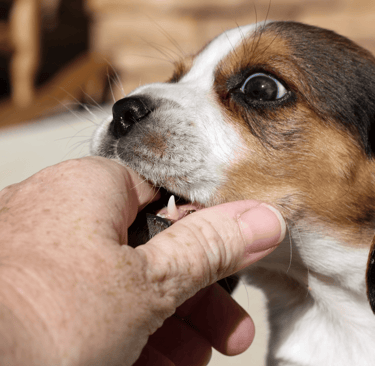
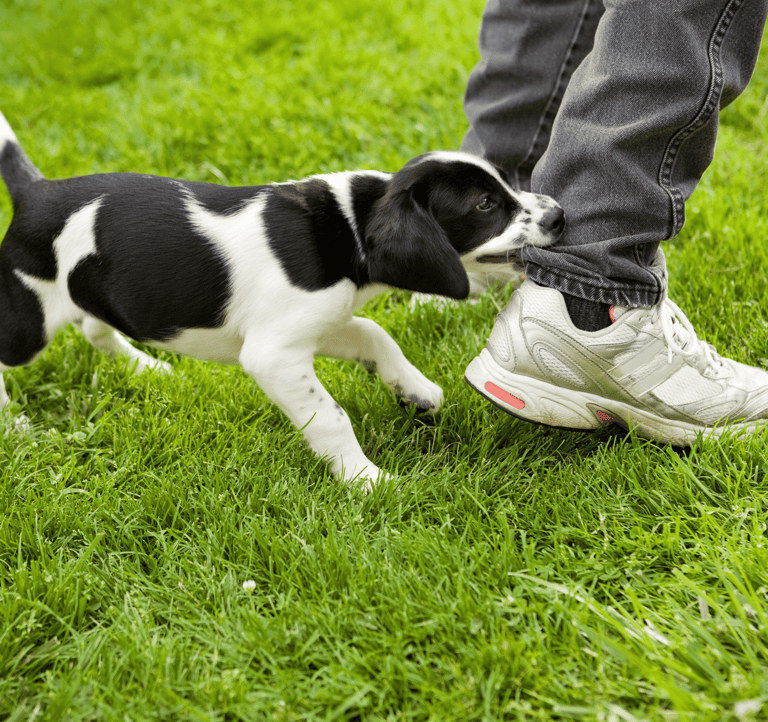
Few things surprise new dog owners more than the moment their adorable puppy suddenly turns into a tiny “landshark.” One minute you're cuddling on the couch, and the next your puppy is chewing your fingers, pant legs, or shoelaces.
If you’re wondering “Why is my puppy biting me?” you’re not alone.
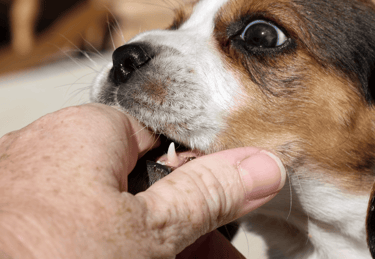
The truth is that puppy biting is one of the most normal behaviors in early canine development. Puppies explore the world with their mouths, play using their teeth, and practice important social skills through mouthing and nipping.
Understanding why puppies bite is the first step to guiding them through this stage calmly and successfully.
In this guide, we’ll break down the real reasons puppies bite, what many dog owners misunderstand about this phase, and the hidden factors that can make biting worse (or better).
First: Puppy Biting Is a Developmental Phase
Puppies are not born knowing how to interact politely with humans.
Instead, they develop social skills through experimentation. Just like human toddlers grab, pull, and test boundaries, puppies use their mouths to learn about their environment.
Their teeth are essentially their hands.
Through mouthing and play, puppies learn:
• How hard they can bite
• What behaviors continue play
• What behaviors stop play
• How to communicate excitement and curiosity
Puppies gradually learn how to control their mouth pressure through interactions with their littermates and later with people. This process is known as bite inhibition and develops over time as puppies receive feedback during play.
When puppies move into human homes, we become part of that learning process.
[Want to learn more about bite inhibition? That's why we developed the Dog Milestones™ Puppy Biting Guide series. This guide is designed to help you understand your puppy's mouthing phase behavior.]
The 6 Real Reasons Puppies Bite
Many articles reduce puppy biting to “teething,” but the truth is far more complex. Puppies bite for many different reasons, most behavior falls into a few common developmental categories.
Understanding the underlying motivation makes it much easier to respond appropriately.
1. Exploration: Puppies Learn With Their Mouths
Humans use our hands to investigate the world.
Puppies use their teeth.
When a puppy nips your fingers, shoelaces, or sleeves, they are gathering information:
• Texture
• Movement
• Reaction
• Taste
• Feedback
This exploration is part of early cognitive development and helps puppies understand what objects are safe, interesting, or rewarding to interact with.
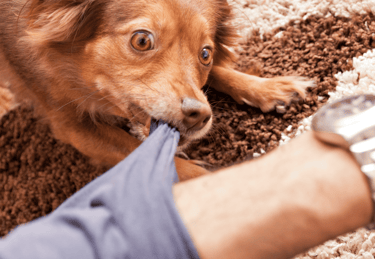
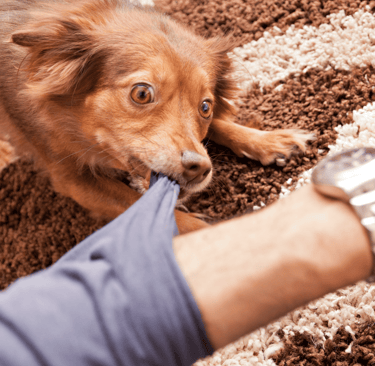
This is also why moving hands or feet often trigger biting—movement activates a puppy’s curiosity and chase instincts.
2. Play Behavior
Many puppy bites are actually invitations to play.
Dogs naturally use their mouths during social play with other dogs.
Your puppy may nip because they are trying to say:
• “Play with me!”
• “This is exciting!”
• “Let’s wrestle!”
Unfortunately, human skin is much more sensitive than puppy fur, which is why those playful nips can hurt.
[ Learn more: Read our article about Puppy Biting During Play }
3. Teething Discomfort
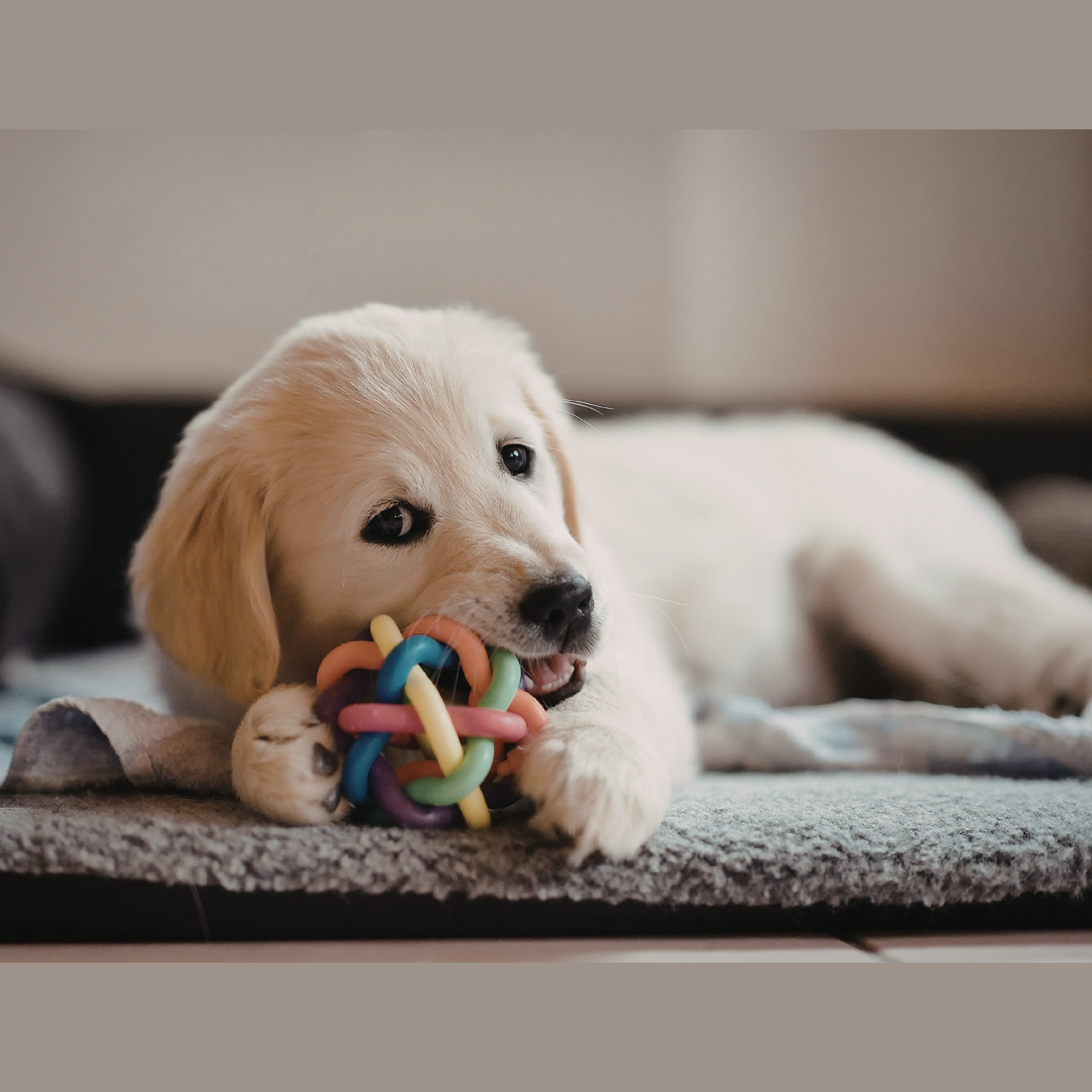
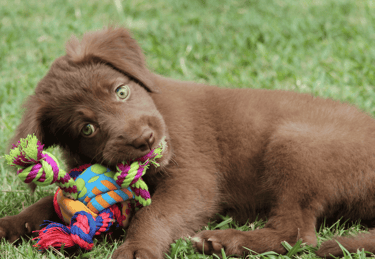
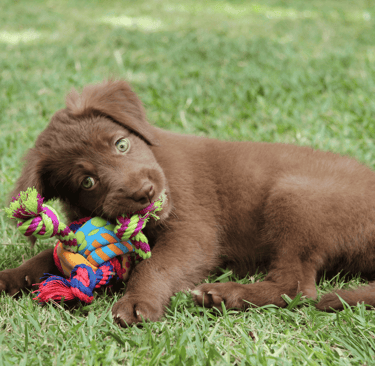
As puppies grow, they eventually lose their baby teeth and develop adult teeth, which can increase chewing behavior for a period of time.
This process can make their gums sore and itchy, leading to increased chewing and biting behavior.
However, there is an important distinction many owners miss:
Teething usually causes chewing on objects — not necessarily biting people.
If your puppy is targeting your hands or ankles, it is often more related to play or excitement, not gum pain.
4. Overstimulation and Overtiredness
One of the most overlooked causes of puppy biting is exhaustion.
Puppies need far more sleep than most people realize—often 18–20 hours per day.
When puppies become overtired or overstimulated, they often lose impulse control. The result can look like:
• Sudden biting bursts
• Zoomies followed by nipping
• Frantic grabbing at clothing
• Jumping and mouthing
These episodes are frequently misinterpreted as bad behavior when they are actually a sign your puppy needs rest.
5. Attention-Seeking
Puppies are incredibly good at discovering what gets a reaction.
If biting your hand makes you:
• Talk to them
• Push them away
• Chase them
• Move your arms around
Your puppy may learn:
“Biting works.”
Even negative attention can reinforce behavior if it creates engagement.
Research on canine behavior shows that many unwanted behaviors continue because they successfully gain attention or access to desired items.
6. Frustration or “Puppy Tantrums”
Sometimes puppies bite when they are frustrated.
Examples include:
• Being picked up
• Being prevented from reaching something
• Having a toy removed
• Being asked to stop play
These moments can lead to what trainers often call puppy tantrums—brief bursts of vocalizing, wriggling, and biting.
While this behavior can look alarming, it is often a temporary stage of emotional regulation development.
Read our full article, 10 Reasons Why Puppies Bite, for a deeper understanding. ]
Want a Step-by-Step Plan to Fix Puppy Biting?
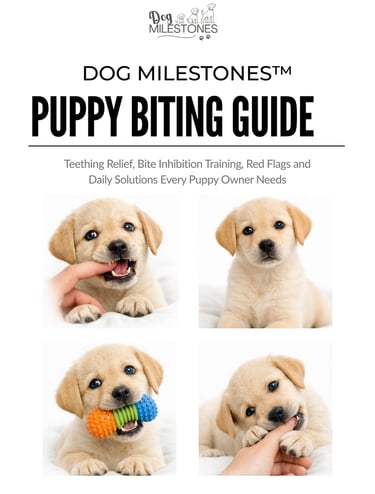
If you’re dealing with constant nipping, ankle biting, or the infamous “landshark phase,” the Dog Milestones™ Puppy Biting Guide series was designed specifically for overwhelmed puppy owners.
Explore the Dog Milestones™ Puppy Biting Guide series today
Hidden Factors That Make Puppy Biting Worse
Some puppies bite more intensely than others. Several environmental factors can influence this.
Lack of Sleep
Overtired puppies are far more mouthy.
If biting spikes at the same times each day—especially evenings—it may indicate your puppy needs more naps.
Too Much Free Roaming
Puppies who have unrestricted access to the home often become overstimulated.
This leads to:
• chasing
• grabbing clothing
• ankle biting
Structured environments help puppies stay calmer and learn better habits.
Inconsistent Responses
If one family member allows playful biting but another reacts strongly, puppies receive mixed signals.
Consistency across all family members is essential.
Missing Social Learning
Puppies learn critical bite control from their littermates.
Dogs separated from their litter too early sometimes struggle more with bite inhibition because they missed part of this learning phase.
What Many Puppy Articles Get Wrong
Most puppy biting articles oversimplify the problem. They focus only on teething or “stop the biting” strategies.
But biting isn’t just a behavior to eliminate.
It is a developmental skill puppies must learn to control.
The real goal is not to stop biting instantly.
The real goal is to teach:
• Bite pressure control
• Appropriate play behavior
• Emotional regulation
• Communication skills
When puppies skip this learning phase, they may grow into adult dogs who never learned how to control their mouth.
When Puppy Biting Is Actually a Good Sign
This might surprise many owners.
But a certain amount of puppy biting is actually healthy.
It shows your puppy is:
• curious
• playful
• socially engaged
• mentally developing
In fact, a puppy that never mouths anything may be unusually inhibited or fearful.
The key is guidance and boundaries, not complete suppression of the behavior.
When Puppy Biting Might Be a Concern
Although most biting is normal, there are situations that deserve closer attention.
You may want professional guidance if your puppy shows:
• stiff body posture before biting
• unusually hard bites
• growling during handling
• guarding toys or food
• biting triggered by fear or avoidance
These situations may indicate a different behavioral issue that should be addressed early.
[ To better understand the difference between normal puppy biting and true aggressive behavior, we’ve created a guide to help dog owners know when a behavior simply needs monitoring and when it may require closer attention. This article explains how to recognize the warning signs, understand what your puppy may be communicating, and respond appropriately.
Read “Puppy Biting vs. Aggression: How to Tell the Difference."]
The Big Picture: Puppy Biting Is Temporary
The good news is that puppy biting is usually a short developmental phase.
Biting typically peaks around 3–4 months of age during teething and gradually improves as puppies develop impulse control and social skills.
Most puppies show significant improvement by 6–7 months, once adult teeth are fully developed and training patterns become established.
With patience and consistent guidance, the sharp little “landshark” phase eventually fades.
And what replaces it is a dog who understands how to interact safely and respectfully with people.
Final Thoughts
If your puppy is biting right now, you are not failing—and your dog is not being “bad.”
They are simply learning.
This stage is part of raising a confident, well-adjusted dog.
With calm guidance, clear boundaries, and patience, your puppy will grow out of the biting phase and develop the self-control needed for adult life.
And one day soon, those tiny teeth will be replaced with something much better:
A dog who knows exactly how to use their mouth gently.
Continue Learning
If you want to better understand your puppy’s behavior, these guides will help you go deeper:
Next Articles to Read:
Understand the reasons why puppies bite and learn what it means for your puppy’s development.
Learn the key body language signals that separate normal puppy play from concerning behavior.
Discover what changes to expect as your puppy develops—and when biting typically improves.
Want a Complete Step-by-Step Puppy Biting System?
This article explains why puppy biting happens.
But most owners also want to know:
• What do I do today when my puppy bites nonstop?
• How do I stop ankle attacks while walking through the house?
• How do I teach gentle mouths step-by-step?
• How do I prevent biting from becoming a long-term habit?
That is exactly why the Dog Milestones Puppy Biting Guide series was created.
Inside the Dog Milestones™ Puppy Biting Guide series you will learn:
✔ Why puppies bite (and what most advice gets wrong)
✔ The daily routines that reduce biting dramatically
✔ How to teach bite inhibition the right way
✔ What to do during peak teething weeks
✔ The common mistakes that accidentally make biting worse
Instead of random tips, you’ll get a clear, step-by-step system used by
thousands of dog owners to survive the puppy biting stage with confidence.
WHAT'S NEXT:
Explore the Dog Milestones™ Puppy Potty Training Guide → (Book Series Coming Soon)
Why do puppies bite so much?
Puppies bite because it is a natural part of development. They explore the world with their mouths, practice social play, learn bite inhibition, and relieve teething discomfort. Biting is especially common between 8 weeks and 6 months while puppies are learning how to control their teeth and interact safely with people.
At what age do puppies stop biting?
Most puppies begin biting less between 4 and 6 months of age as adult teeth develop and impulse control improves. However, training, sleep routines, and consistent boundaries play a major role. With proper guidance, most puppies significantly reduce biting by 6–7 months old.
Is puppy biting normal?
Yes. Puppy biting is completely normal behavior during early development. Puppies learn social skills and bite control by mouthing and playing. The goal is not to eliminate biting immediately, but to teach puppies how to use their mouths gently and appropriately around people.
Why does my puppy bite my hands and feet?
Hands and feet often trigger biting because movement activates a puppy’s natural chase and play instincts. Puppies may also nip when they are excited, overtired, frustrated, or trying to start play. Teaching calm play and providing appropriate toys helps redirect this behavior.
Do puppies bite more when teething?
Yes. Teething usually occurs between 3 and 6 months of age, which can increase chewing and mouthing behaviors. Puppies often seek objects to chew because their gums feel sore or itchy. Providing safe chew toys helps relieve discomfort and prevents destructive chewing.
When should I worry about puppy biting?
Most puppy biting is normal, but you should consult a trainer or veterinarian if a puppy shows stiff body posture, intense growling, repeated hard bites, guarding behavior, or fear-based reactions. These signs may indicate a behavioral issue that needs professional guidance.
Puppy Biting: Quick Answers Dog Owners Need to Know
People Also Ask:
Puppy Biting Questions Dog Owners Have
Why is my puppy biting me aggressively?
Most puppy biting is not aggression. Puppies often bite harder when they are overexcited, overtired, or frustrated during play. True aggression usually includes warning signs like stiff body posture, prolonged growling, guarding behavior, or repeated hard bites meant to cause harm.
Why does my puppy bite more at night?
Many puppies become mouthier in the evening because they are overtired or overstimulated from the day. Puppies need up to 18–20 hours of sleep per day, and when they miss naps they can lose impulse control. Evening biting is often a sign that your puppy needs structured rest.
Should I let my puppy mouth my hands?
Light mouthing can be part of normal play, but puppies must learn bite inhibition and appropriate boundaries. If a puppy bites too hard or repeatedly targets hands, calmly stop play and redirect them to a toy so they learn that gentle behavior keeps interaction going.
Why does my puppy bite my clothes and pant legs?
Clothing and pant legs move as you walk, which triggers a puppy’s chase and play instincts. This behavior is especially common in energetic breeds and herding dogs. Puppies often grab fabric because it moves like prey and creates an exciting game.
What is the fastest way to stop puppy biting?
There is no instant fix, but the most effective approach combines consistent redirection, calm withdrawal of attention, structured play, and adequate sleep. Puppies learn quickly when gentle behavior keeps play going and biting consistently ends interaction.
If your puppy struggles with biting, restlessness, or evening chaos,
consistency may be the missing piece — not more effort.
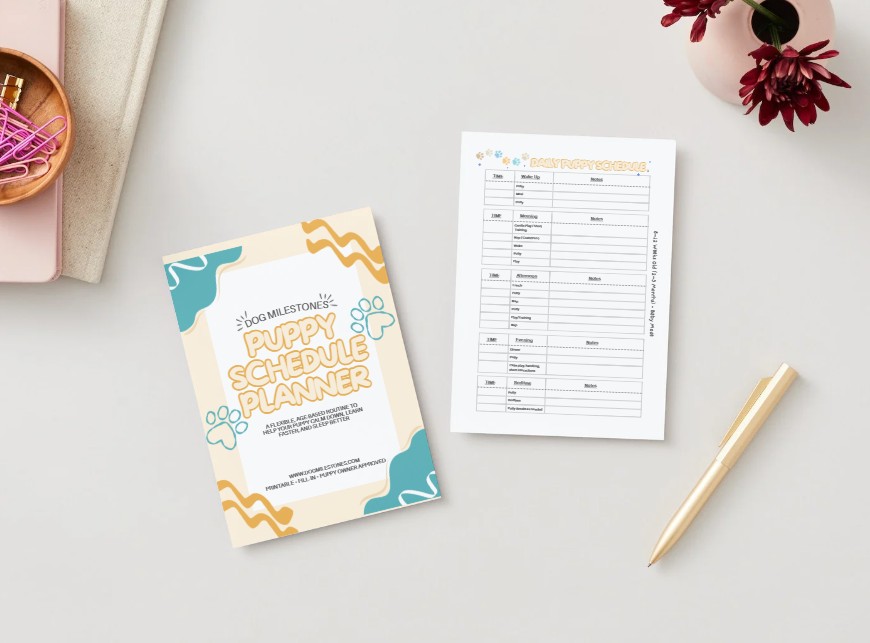
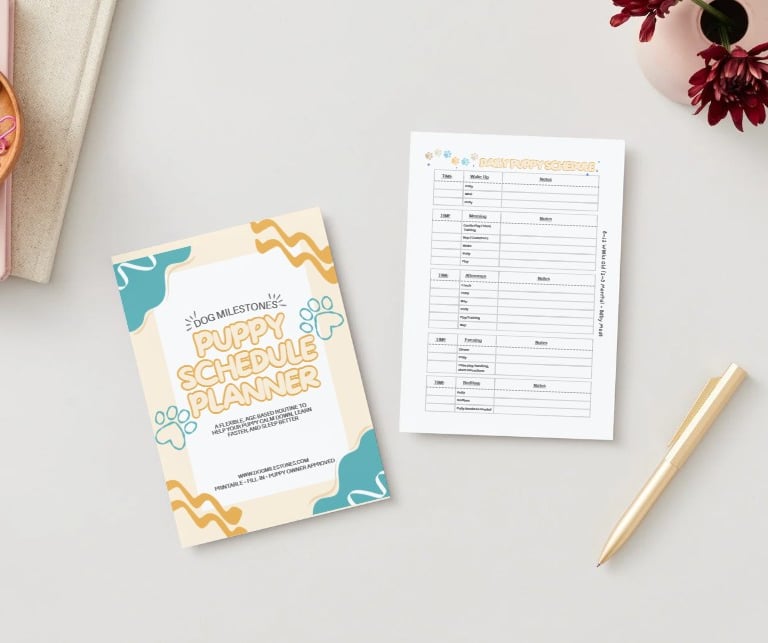
Download our free Puppy Schedule and see first hand how intentional routines help anxious puppies relax, sleep better, and feel secure.
Calm doesn’t happen by accident. It’s built, one predictable day at a time.
Its 100% ready, you just need to plug in the times.
What the PDF Includes:
• Instructions on How To Create A Schedule
• What To Expect As Your Dog Ages
• Puppy Profile - Perfect for day cares and puppy sitters/walkers
• Potty tracking
• Blank Hour-by-hour Daily Schedule
• Suggested Activities ( based on puppies age) Daily Schedule - Blank time slots to fill in
• Notes section - Track behaviors and habits. A nice way to see training progress or negative behaviors forming.
Get Started now - Download our free puppy schedule printable and customize it to your life — not someone else’s routine.
If you need more help with creating a Puppy Schedule
👉 Read → [How to Create a Realistic Puppy Schedule (By Age, Not Perfection)]
info@dogmilestones.com
Join Our Puppy Community
Get weekly puppy tips, milestone guides, and helpful resources delivered to your inbox.
Also, we’ll send over our Dog Milestones Puppy Behavior Quiz to help you with tailored advice for your pup.
SOCIALS
Dog Milestones™
Clear, compassionate guidance for your puppy's development journey.
Quick Links
Resources
© 2026 Dog Milestones. Made with ❤️ for dogs and their humans. All rights reserved.