
10 Reasons Puppies Bite (Explained by Behavior Type)
The key to understanding biting is recognizing what type of behavior your puppy is expressing in the moment.
3/9/20267 min read
Share Article
If you’ve recently brought home a puppy, you may already be asking the question nearly every new dog owner asks:
“Why does my puppy bite so much?”
Puppy biting is one of the most common — and often misunderstood — behaviors in early dog development. Many new owners assume biting means their puppy is being naughty or aggressive.
In reality, puppy biting is communication.
Puppies communicate and interact with the world using their mouths in many different ways. The key to understanding biting is recognizing what type of behavior your puppy is expressing in the moment.
Some bites are playful.
Some are exploratory.
Others happen because puppies are tired, frustrated, or overstimulated.
Once you learn to recognize these different behavior types, puppy biting becomes much easier to understand — and much easier to manage.
Below are 10 of the most common reasons puppies bite, organized by the type of behavior your puppy is displaying.
Play Behavior Biting
1. Social Play Biting
One of the most common reasons puppies bite is simply play.
Dogs naturally use their mouths during play with other dogs. Wrestling, gentle nipping, and grabbing are normal parts of puppy interaction.
When puppies move into human homes, they often attempt to play the same way with people.
Signs of play biting include:
• relaxed body language
• bouncing or wiggling
• loose tail wagging
• playful growling
• stopping and restarting play
Play biting tends to happen when puppies are excited and engaged with their owners.
The challenge is that human skin is much more sensitive than dog fur, so what feels like normal play to a puppy can feel painful to us.
2. Chase-and-Grab Biting
Some puppies bite because they are triggered by movement.
When you walk past your puppy, your moving feet or swinging pant legs can activate their natural chase instinct. Puppies may grab ankles, socks, or clothing as if they are catching prey.
This behavior is especially common in:
• herding breeds
• high-energy working breeds
• puppies with strong prey drive
The faster the movement, the more exciting the game becomes from the puppy’s perspective.
[ If your puppy turns every walk across the room into an ankle-chasing game, there’s a reason for it. Moving feet trigger powerful instincts in young dogs, which is why this behavior appears so suddenly during puppyhood.
We break down why puppies target feet and ankles, what it means, and how to reduce the behavior safely in our detailed guide.
Read the full article: “Why Puppies Bite Feet and Ankles (And How to Stop It).” ]
Exploration Behavior Biting
3. Curiosity Biting
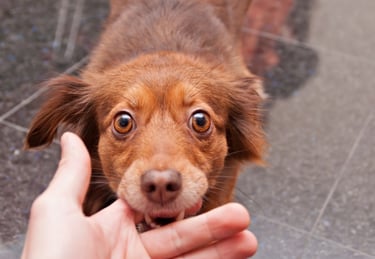
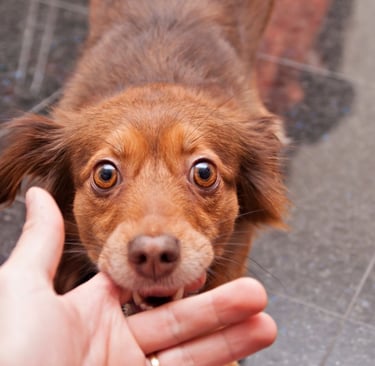
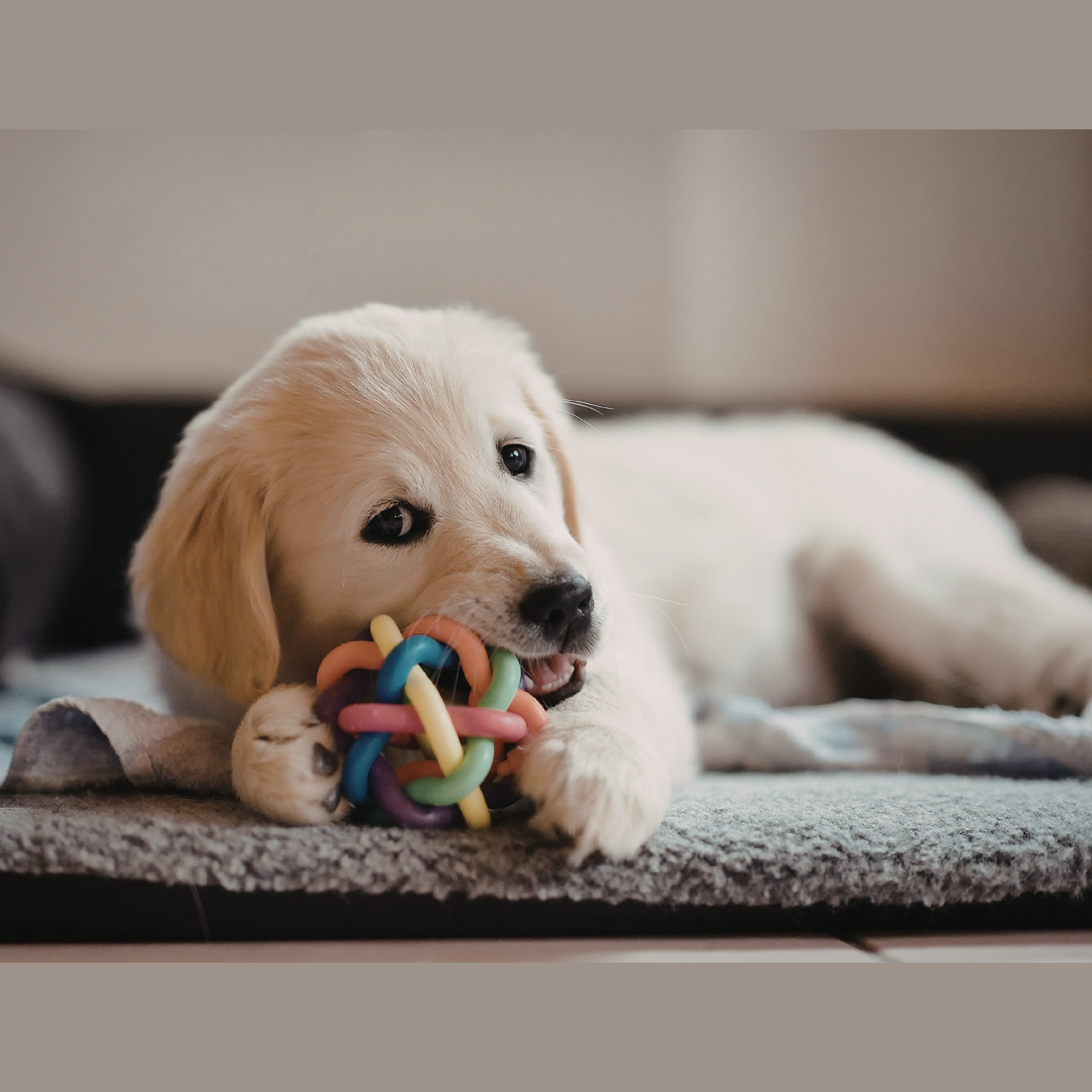
Puppies investigate new objects using their mouths to gather sensory information such as texture, movement, and reaction.
They investigate new objects using their mouths. When puppies mouth fingers or hands, they are often gathering sensory information.
This type of biting is usually:
• gentle
• brief
• exploratory rather than intense
Curiosity biting tends to decrease naturally as puppies gain more experience with their environment.
4. Object Comparison Biting
A behavior many owners overlook is object comparison.
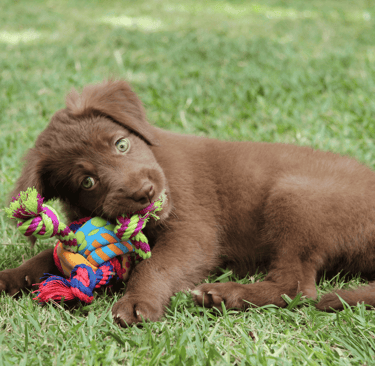
Puppies sometimes mouth several different objects in a row — a toy, your sleeve, a shoe, and a blanket — because they are comparing textures and feedback.
From the puppy’s perspective, they are learning:
• which objects move
• which objects squeak
• which objects humans react to
Unfortunately, human hands often produce the most interesting reaction.
Physical Development Biting
5. Teething Relief Biting
As puppies grow, they eventually lose their baby teeth and develop adult teeth.
During this stage, chewing and mouthing behaviors increase because:
• gums feel sore
• new teeth are emerging
• pressure relieves discomfort
However, teething often increases chewing on objects more than people. If puppies are targeting hands or clothing, there may be another behavior type involved.
6. Oral Motor Practice
Another little-discussed reason puppies bite is motor skill development.
Puppies must learn how to control the strength and precision of their jaws. Mouthing objects and play biting help them practice adjusting bite pressure.
This process is similar to how human babies learn hand coordination by grasping objects.
Without opportunities to practice mouth control, puppies may struggle later with bite inhibition and play regulation.
Emotional State Biting
7. Overstimulation Biting
Puppies have limited ability to regulate excitement.
When stimulation levels get too high — during intense play, busy environments, or long activity periods — puppies may start biting because they are overwhelmed.
Overstimulation biting often appears as:
• rapid nipping
• jumping and grabbing
• frantic movement
• inability to settle
8. Frustration Biting
Sometimes puppies bite because something they want is unavailable.
This can happen when:
• a toy is removed
• a puppy is prevented from reaching something
• a game suddenly stops
• the puppy is picked up unexpectedly
Frustration biting is often brief and accompanied by vocalization, wriggling, or attempts to regain the desired object.
Young puppies are still learning how to cope with frustration, so these reactions are part of emotional development.
Communication Biting
9. Attention-Seeking Biting
Puppies quickly learn which behaviors cause humans to respond.
If biting consistently results in interaction — even negative interaction — puppies may repeat the behavior to gain attention.
For example, biting might cause an owner to:
• talk to the puppy
• chase the puppy
• push the puppy away
• engage in play
From the puppy’s perspective, the behavior successfully triggered engagement.
This type of biting often happens when puppies are bored or seeking stimulation.
10. Boundary Testing
As puppies grow more confident in their new home, they begin experimenting with behavior boundaries.
This may include:
• grabbing hands during play
• mouthing clothing
• testing whether biting stops interaction
This is a normal part of social learning.
Puppies are essentially asking:
“Is this behavior allowed?”
Consistent responses help puppies learn which behaviors continue play and which behaviors end it.
Why Understanding Behavior Types Matters
Many puppy biting problems occur because owners respond to all biting the same way, even though the motivation behind the behavior may be completely different.
For example:
• A tired puppy needs rest.
• A playful puppy needs structured interaction.
• A teething puppy needs appropriate chew outlets.
• A frustrated puppy needs calm guidance.
When you recognize the behavior type behind the bite, you can respond in a way that teaches the puppy rather than simply reacting.
The Good News: Puppy Biting Is Temporary
While puppy biting can feel overwhelming in the moment, it is usually a short phase in a dog’s development.
As puppies mature, gain impulse control, and finish teething, biting behavior typically decreases significantly.
Most puppies show major improvement as they mature and gain impulse control. Around the time adult teeth are fully in and social skills are more developed.
With patience, structure, and consistent guidance, your puppy will gradually replace biting with calmer ways of interacting.
Continue Learning About Puppy Biting
Understanding why puppies bite is the first step toward solving the problem.
If you want to explore the topic in more detail, start with our full guide:
Why Puppies Bite: The Complete Dog Owner’s Guide
You may also find these articles helpful:
• Puppy Biting vs. Aggression: How to Tell the Difference
• Puppy Biting Stopping Timeline (Week by Week)
These guides explain how puppy biting develops over time and when it may signal something more serious.
Want a Step-by-Step Plan to Stop Puppy Biting?
If your puppy feels like a full-time “landshark,” you’re not alone.
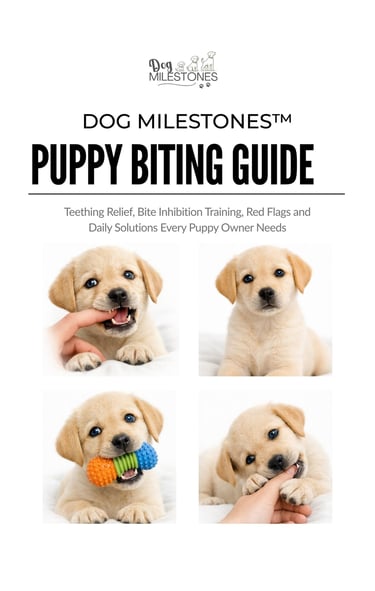
The Dog Milestones™ Puppy Biting Guide series was created to help overwhelmed puppy owners understand exactly what’s happening — and what to do about it.
Instead of guessing, you’ll have a clear roadmap to guide your puppy through the biting stage calmly and confidently.
Explore the Dog Milestones Puppy Biting Guide Series


Want a Complete Step-by-Step Puppy Biting System?
This article explains why puppy biting happens.
But most owners also want to know:
• What do I do today when my puppy bites nonstop?
• How do I stop ankle attacks while walking through the house?
• How do I teach gentle mouths step-by-step?
• How do I prevent biting from becoming a long-term habit?
That is exactly why the Dog Milestones Puppy Biting Guide series was created.
Inside the Dog Milestones™ Puppy Biting Guide series you will learn:
✔ Why puppies bite (and what most advice gets wrong)
✔ The daily routines that reduce biting dramatically
✔ How to teach bite inhibition the right way
✔ What to do during peak teething weeks
✔ The common mistakes that accidentally make biting worse
Instead of random tips, you’ll get a clear, step-by-step system used by
thousands of dog owners to survive the puppy biting stage with confidence.
WHAT'S NEXT:
Explore the Dog Milestones™ Puppy Potty Training Guide → (Book Series Coming Soon)
If your puppy struggles with biting, restlessness, or evening chaos,
consistency may be the missing piece — not more effort.
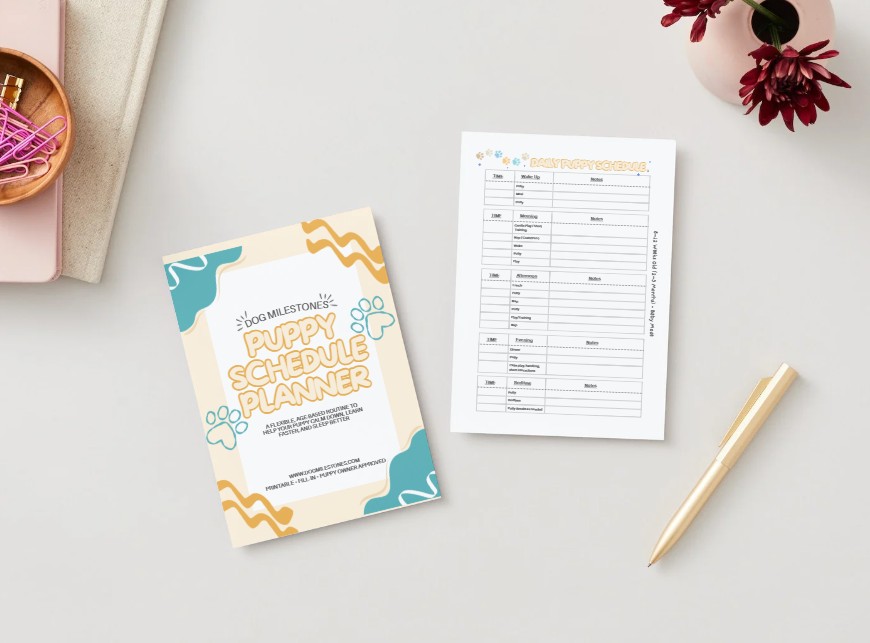
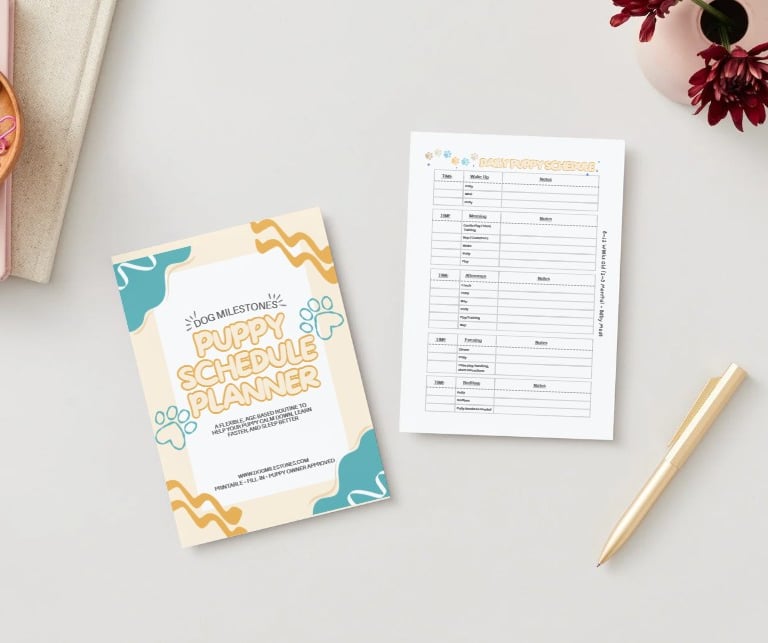
Download our free Puppy Schedule and see first hand how intentional routines help anxious puppies relax, sleep better, and feel secure.
Calm doesn’t happen by accident. It’s built, one predictable day at a time.
Its 100% ready, you just need to plug in the times.
What the PDF Includes:
• Instructions on How To Create A Schedule
• What To Expect As Your Dog Ages
• Puppy Profile - Perfect for day cares and puppy sitters/walkers
• Potty tracking
• Blank Hour-by-hour Daily Schedule
• Suggested Activities ( based on puppies age) Daily Schedule - Blank time slots to fill in
• Notes section - Track behaviors and habits. A nice way to see training progress or negative behaviors forming.
Get Started now - Download our free puppy schedule printable and customize it to your life — not someone else’s routine.
If you need more help with creating a Puppy Schedule
👉 Read → [How to Create a Realistic Puppy Schedule (By Age, Not Perfection)]
info@dogmilestones.com
Join Our Puppy Community
Get weekly puppy tips, milestone guides, and helpful resources delivered to your inbox.
Also, we’ll send over our Dog Milestones Puppy Behavior Quiz to help you with tailored advice for your pup.
SOCIALS
Dog Milestones™
Clear, compassionate guidance for your puppy's development journey.
Quick Links
Resources
© 2026 Dog Milestones. Made with ❤️ for dogs and their humans. All rights reserved.