
Frequently Asked Questions
Clear answers to common questions about puppy development, behavior, and care.
Share
Can I quickly search this page for my answer?
Yes, you can quickly search this page for your answer using the Find feature in your web browser.
Windows, Linux, and ChromeOS: Press Ctrl + F.
Mac: Press Cmd + F.
This will open a search bar ( usually in the top right of the screen) allowing you to type words or phrases and instantly locate them on the page.
Are there articles associated with these FAQs that provide more information?
Yes. If you click the bold header of any question below you will be redirected to an article that further explains the answer to your desired question.
Also, if you do not see what you need feel free to contact us. We are here to help.
What is calm puppy training?
Calm puppy training focuses on teaching puppies to regulate their energy through structured routines, rest, clear boundaries, and positive reinforcement rather than punishment or overstimulation.
How often should a puppy nap during the day?
Most puppies need a nap every 1–2 hours of awake time. Younger puppies require more frequent naps, while older puppies can stay awake slightly longer between rest periods.
Can enforced naps reduce puppy anxiety?
Yes. Predictable rest periods lower stress hormones and help puppies feel safe, especially during alone time, transitions, and crate training.
Is crate training cruel for puppies?
No. When introduced properly, a crate provides a safe, calming space for rest and prevents overstimulation, accidents, and destructive behavior.
How does crate training help with housebreaking?
Crate training works with a puppy’s natural instinct to keep their sleeping area clean, helping them learn bladder control and appropriate elimination locations faster.
When should puppy socialization begin?
Puppy socialization should begin between 4 and 16 weeks of age, exposing puppies to people, animals, environments, and sounds in a positive, controlled way.
Why does my puppy bite more when tired?
Overtired puppies lose impulse control, making biting, nipping, and ignoring cues more likely. Structured rest helps prevent these behaviors before they escalate.
Do puppies really need enforced naps?
Yes. Puppies need 18–20 hours of sleep per day, and enforced naps prevent overtired behaviors such as biting, zoomies, whining, and anxiety.
How do I discipline a puppy without punishment?
Effective puppy discipline focuses on redirection, prevention, clear routines, and calm consequences rather than harsh corrections or physical punishment.
What is the best daily routine for a puppy?
The best puppy routine balances short play sessions, training, meals, potty breaks, and frequent naps. Consistency helps puppies learn faster and remain calmer.
Why is consistency important in puppy training?
Consistency helps puppies understand expectations, reduces confusion, and builds confidence, making training faster and behavior more reliable.
Can schedules help anxious puppies?
Yes. Predictable schedules provide structure and security, which reduces anxiety and helps puppies settle more easily throughout the day.
What are enforced naps for puppies?
Enforced naps are scheduled rest periods where a puppy is placed in a calm, low-stimulation environment to sleep before becoming overtired. Puppies do not reliably regulate their own sleep, so enforced naps help prevent behavior problems caused by exhaustion, such as biting, zoomies, and ignoring commands.
How many naps should a puppy have each day?
Most puppies need multiple naps throughout the day, totaling 18–20 hours of sleep in a 24-hour period. This typically means a nap every 1–2 hours during active parts of the day, depending on the puppy’s age, breed, and stimulation level.
Are enforced naps the same as crate training?
No. Enforced naps and crate training are related but not the same. Enforced naps focus on rest and nervous system regulation, while crate training focuses on comfort with confinement. Puppies can take enforced naps in crates, playpens, or gated rooms, as long as the environment feels safe and calm.
Will enforced naps make my puppy hate the crate?
When done correctly, enforced naps often improve crate acceptance rather than harm it. Puppies who are placed in the crate before becoming overtired are more likely to relax and fall asleep. Resistance usually happens when a puppy is already overstimulated or stressed.
How do I know if my puppy is overtired or just energetic?
Overtired puppies often show sudden behavior changes such as harder biting, frantic zoomies, increased barking, ignoring cues, or appearing “out of control.” True energy looks playful and responsive, while overtired behavior feels chaotic and dysregulated.
Enforced Naps for Puppies:
FAQs
Is it okay if my puppy whines briefly during enforced naps?
Brief protesting or whining can be normal as a puppy transitions into rest, especially when first learning a nap routine. However, prolonged distress, panic, or escalation means the setup needs adjustment. Enforced naps should reduce stress, not create it.
Can enforced naps help with puppy biting?
Yes. Overtired puppies have reduced impulse control, which often leads to increased biting and nipping. Enforced naps give the nervous system time to reset, which frequently results in softer play, fewer bites, and improved responsiveness.
At what age should puppies start enforced naps?
Enforced naps are most helpful from the moment a puppy comes home, typically between 8 and 16 weeks of age. That said, older puppies and even adolescent dogs can benefit from structured rest if they struggle with over-arousal or anxiety.
How long should an enforced nap last?
Enforced naps usually last between 1 and 2 hours, depending on the puppy. Some puppies may sleep longer, especially after mentally or socially demanding activities. It’s generally best to let the puppy wake naturally rather than setting strict wake-up times.
Do puppies outgrow the need for enforced naps?
As puppies mature and develop better self-regulation, they rely less on enforced naps. However, many adult dogs still benefit from structured rest, especially in busy households or during periods of change. Teaching rest early creates calm habits that last into adulthood.
Common Puppy Behavior Questions
Get clear answers to the questions that matter most during your puppy's development.
Still Have Questions?
Can't find what you're looking for? Check out our comprehensive blog articles or reach out through our contact page.
If your puppy struggles with biting, restlessness, or evening chaos,
consistency may be the missing piece — not more effort.
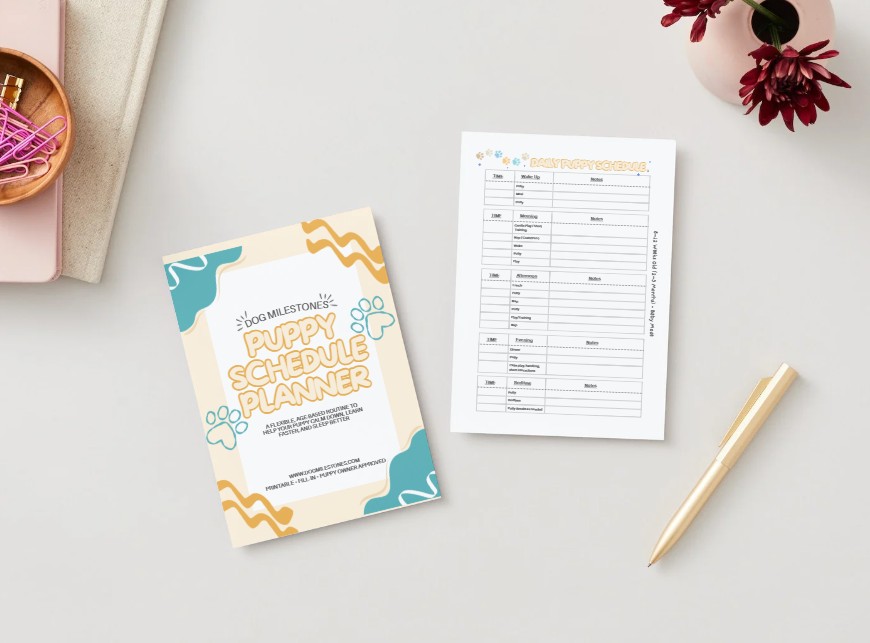
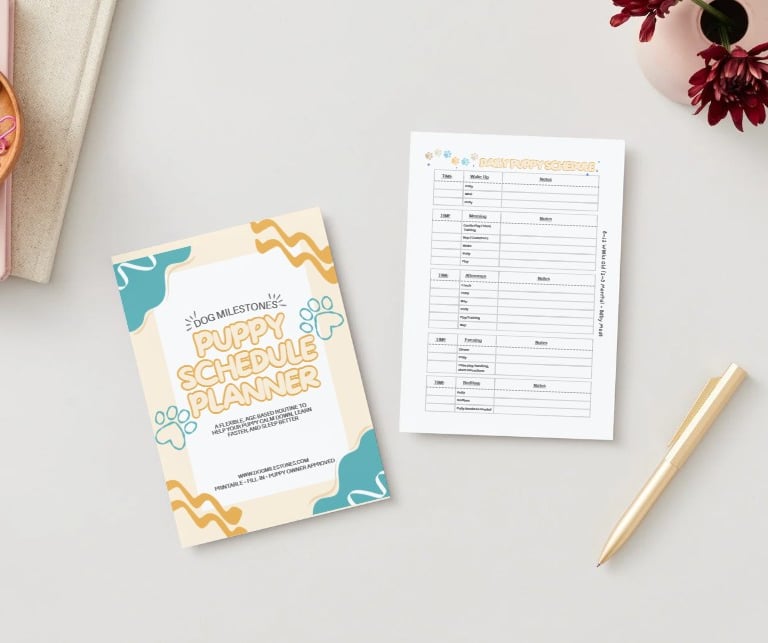
Download our free Puppy Schedule and see first hand how intentional routines help anxious puppies relax, sleep better, and feel secure.
Calm doesn’t happen by accident. It’s built, one predictable day at a time.
Its 100% ready, you just need to plug in the times.
What the PDF Includes:
• Instructions on How To Create A Schedule
• What To Expect As Your Dog Ages
• Puppy Profile - Perfect for day cares and puppy sitters/walkers
• Potty tracking
• Blank Hour-by-hour Daily Schedule
• Suggested Activities ( based on puppies age) Daily Schedule - Blank time slots to fill in
• Notes section - Track behaviors and habits. A nice way to see training progress or negative behaviors forming.
Get Started now - Download our free puppy schedule printable and customize it to your life — not someone else’s routine.
If you need more help with creating a Puppy Schedule
👉 Read → [How to Create a Realistic Puppy Schedule (By Age, Not Perfection)]
info@dogmilestones.com
Join Our Puppy Community
Get weekly puppy tips, milestone guides, and helpful resources delivered to your inbox.
Also, we’ll send over our Dog Milestones Puppy Behavior Quiz to help you with tailored advice for your pup.
SOCIALS
Dog Milestones™
Clear, compassionate guidance for your puppy's development journey.
Quick Links
Resources
© 2026 Dog Milestones. Made with ❤️ for dogs and their humans. All rights reserved.