
Effective Crate Training for Calm, Confident Dogs (Without Creating Anxiety)
Ever thought “I want my puppy safe and calm — but I’m scared the crate will be traumatizing.”
1/30/20262 min read
Share Article


Why Crates Are About Safety, Not Control
Crate training isn’t about confinement — it’s about predictability, rest, and emotional regulation. Puppies who don’t have a safe off-switch often spiral into overtired chaos that looks like bad behavior but is actually stress.
Section 1: Environmental Control Comes First
Before training behavior, control the environment.
Key principles:
Puppies explore with their mouths. Freedom must be earned, not given. Calm behavior happens more easily in small, predictable spaces
Tools:
Crates (sleep + enforced rest)
Exercise pens (play + independence)
Baby gates (supervised freedom)
Think of these as training wheels — not lifelong restrictions.
Section 2: How to Introduce the Crate the Right Way
Non-negotiables:
Never use the crate for punishment
Never shove or force
Never ignore panic-level distress
Step-by-step:
Place crate in a social area (not isolated)
Door open — treats tossed inside
Feed meals inside the crate
Add bedding, chew, familiar scent
Close door briefly while you stay nearby
This builds emotional safety, not tolerance.
Section 3: Building Duration Without Creating Separation Anxiety
Crate success is about timing, not toughness.
Exercise → potty → crate
Crate = nap time, not exile
Release only during quiet moments. Quiet is rewarded. Noise is ignored — not punished.
Section 4: Apartment Living & Noise Concerns (Real Talk)
You’re not failing if crate training feels hard — it’s hard.
Smart adaptations:
Introduce neighbors early
Start training mid-day, not at night
Cover crate for den-like security
Sleep nearby for first few nights
Use heartbeat/snuggle toys
If a crate truly doesn’t work:
Use baby-gated hallway
Puppy-proofed room
Smaller space = calmer nervous system. Safety > ideology
Section 5: How Crates Improve Potty Training Automatically
Dogs avoid soiling their sleeping space.
Crates:
Teach bladder control
Reduce accidents
Speed up potty learning
Lower frustration for both dog and owner
--> For more help read: Potty Training for Calm, Stress-Free Puppies
Section 6: Signs Crate Training Is Working
Puppy enters voluntarily
Settles within minutes
Sleeps deeper
Fewer accidents
Less biting/zoomies
That’s calm training in action.
If you would like further information on Calm Training Techniques and or Crate Training... Read this helpful article next:
–> Calm Dog Training Techniques
Consistency builds calm. Calm builds confidence.

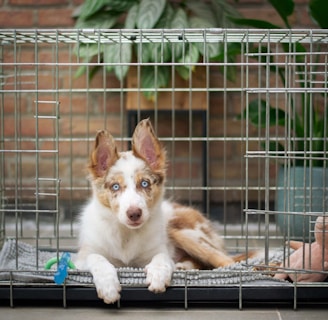


A Calm Puppy Starts With a Consistent Day
If your puppy seems anxious, restless, or easily overwhelmed, it’s not a personality flaw—it’s usually a lack of predictability. Puppies feel safest when they know what comes next.
That’s why routines are so powerful.
I’ve created a FREE Puppy Daily Schedule designed to bring calm, confidence, and structure to your puppy’s day—without being rigid or overwhelming.
✔️ Know when to feed, play, train, nap, and potty
✔️ Reduce anxiety and overstimulation
✔️ Help your puppy feel safe, secure, and understood
--> Download the Free Puppy Schedule here and give your puppy the consistency they’re craving.

info@dogmilestones.com
Join Our Puppy Community
Get weekly puppy tips, milestone guides, and helpful resources delivered to your inbox.
Also, we’ll send over our Dog Milestones Puppy Behavior Quiz to help you with tailored advice for your pup.
SOCIALS
Dog Milestones™
Clear, compassionate guidance for your puppy's development journey.
Quick Links
Resources
© 2026 Dog Milestones. Made with ❤️ for dogs and their humans. All rights reserved.