
How to Create a Realistic Puppy Schedule (By Age, Not Perfection)
Here is the age advancing puppy schedule you've been waiting for. Easy to understand and implement. Plus FREE Download to start today!
1/19/20265 min read
Share Article
If you’ve ever searched “perfect puppy schedule” and immediately felt overwhelmed — you’re not alone. There is a lot of information and a lot of suggestions out there.
Most puppy schedules online look great on paper… and completely fall apart in real life. A realistic puppy schedule doesn’t aim for perfection.
It balances the following:
• potty needs
• meals
• short training
• play
• and a lot of sleep
• Most importantly, it works for your puppy’s age and your actual day-to-day life.
Let’s build a schedule is easy to implement.
Why Puppies Thrive on Schedules (But Not Rigid Ones)
Puppies don’t need strict clock-watching — they need predictable rhythms.
A good schedule will:
• reduces accidents
• prevents overtired “gremlin mode”
• builds confidence
• makes training easier
• helps puppies settle independently
Think flexible structure, not military routine. The Core Building Blocks of Any Puppy Schedule
No matter the age, every puppy schedule includes:
Potty Breaks - Every 2–4 hours
Always after:
• waking up
• eating
• playing
• before naps/bedtime
A good rule of thumb:
Age (in months) + 1 hour = max hold time (rough estimate)
Meals - 3 meals per day for most puppies
Always:
• Feed at consistent times
• Potty break immediately after eating
Training & Play - Short sessions only - 5–15 minutes max
• Multiple times per day
• Stop before overstimulation
Sleep (This Is the Big One)
Puppies need 18–20 hours of sleep per day
Most behavior problems come from being overtired. Enforced naps are not mean — they’re necessary.
Daily Puppy Task Checklist (All Ages)
Every day should include:
☐ 5–6 potty breaks (more for younger pups)
☐ 3 meals
☐ 2–4 short play sessions
☐ 1–3 short training sessions
☐ Enforced naps
☐ Calm bonding time
Realistic Puppy Schedules by Age
These are suggestions, not rigid rules. Adjust times to fit your life.
8–12 Weeks Old (2–3 Months)
“Baby mode”
Awake time: 45–60 minutes
Nap time: 1.5–2 hours
Night potty: 2–3 times
Sample Day
7:00 AM – Wake up → potty → breakfast → potty
8:00 AM – Gentle play or short training (5 mins)
8:45 AM – Nap (crate or pen)
10:30 AM – Wake → potty → play
12:00 PM – Lunch → potty
12:45 PM – Nap
2:30 PM – Potty → play/training
4:00 PM – Nap
5:30 PM – Dinner → potty
Evening – Calm play, handling, short interactions
9:30 PM – Last potty → bedtime
Overnight – Potty breaks as needed


12–16 Weeks Old (3–4 Months)
“More aware, still a baby”
Awake time: 1–1.25 hours
Nap time: 2 hours
Night potty: 1–2 times
Sample Day
7:00 AM – Wake → potty → breakfast
8:00 AM – Training/play (10 mins)
9:00 AM – Nap
11:00 AM – Potty → play
12:00 PM – Lunch → potty
1:30 PM – Nap
4:00 PM – Potty → play/training
6:00 PM – Dinner
Evening – Calm hangout, chew toys
10:00 PM – Last potty → bed
Many puppies at this age do best with:
1 hour up → 1 hour solo play → 2 hours nap
5–6 Months Old
“Teen energy begins”
Awake time: 2–3 hours
Nap time: 1.5–2 hours
Night potty: usually none
Sample Day
7:30 AM – Wake → potty → breakfast
Morning – Walk, enrichment, chill time
Late Morning – Nap
Midday – Potty → training/play → lunch
Afternoon – Nap or quiet time with a chewy toy
Evening – Training, play, dinner
Night – Calm downtime → bed
Expect more boundary testing — structure matters more here, not less.
16–20 Weeks Old (4–5 Months)
“Busy brain, growing confidence”
Awake time: 1.5–2 hours
Nap time: 2 hours
Night potty: often 0–1 times
Sample Day
8:30 AM – Wake → potty → breakfast
9:30 AM – Solo play or enrichment
10:30 AM – Nap
1:00 PM – Potty → training/play
2:00 PM – Nap
5:00 PM – Walk (short, low-impact)
6:00 PM – Dinner
Evening – Calm play, grooming, settling
10:00 PM – Last potty → bed
At this age, many puppies can handle more freedom, but still need naps enforced.
6-12 Months Old
Teen Months into Adulthood
Sample Day
7:30 AM: Wake → potty → breakfast
Morning – Short Walk → enrichment, chill play time.
Late Morning – Nap (in crate or designated area)
Midday - Potty break → perhaps a light snack or training session.
Afternoon - Nap time or quiet time with a chew toy
Late Afternoon - walk → playtime → training.
Evening - Dinner → potty break → Active playtime or training session.
Night/Bedtime - Calm evening → last potty break → bedtime ( around 9:30pm).
Be aware that around this time your puppy will be going through their normal “rebellious/regression” stage. Where you will notice changes in their behavior and less listening. If your puppy is overstimulated, the answer is not more excitement or more punishment — it’s structure and calm leadership. This is why a schedule is supper important for you and your puppy.
Why Schedules Fail (And How to Fix Them)
Common mistakes:
• Too much exercise
• Too little sleep
• Long training sessions
• No downtime
• Expecting adult behavior too soon
If your puppy is:
• biting more
• ignoring cues
• zooming uncontrollably
They likely need more rest, not more activity.
Don’t Have Time to Create Your Own Detailed Schedule?
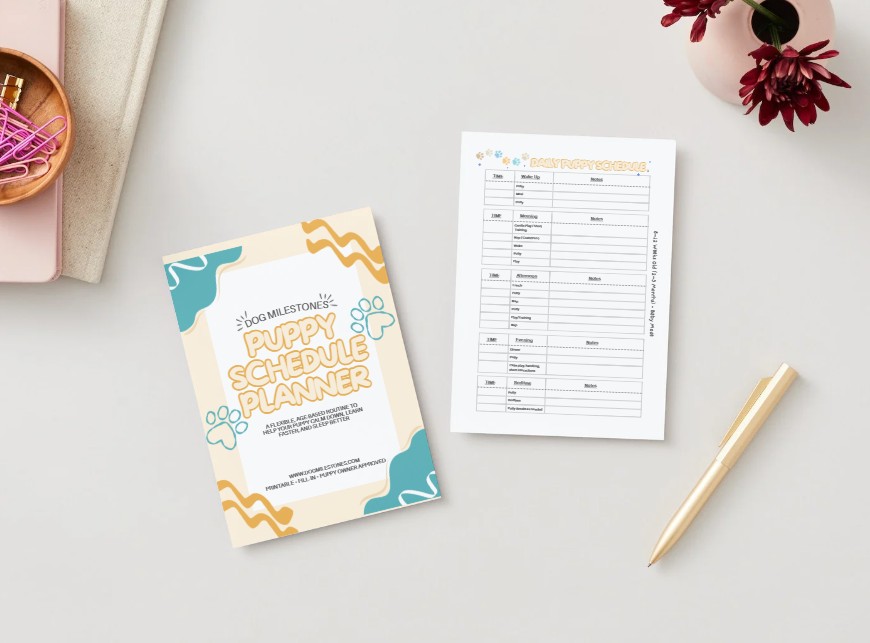
Then download our : Free Puppy Schedule PDF
What the PDF Includes:
• Instructions on How To Create A Schedule
• What To Expect As Your Dog Ages
• Puppy Profile - Perfect for day cares and puppy sitters/walkers
• Potty tracking
• Blank Hour-by-hour Daily Schedule
• Suggested Activities ( based on puppies age) Daily Schedule - Blank time slots to fill in
• Notes section - Track behaviors and habits. A nice way to see training progress or negative behaviors forming.
Get Started now - Download our free puppy schedule printable and customize it to your life — not someone else’s routine.
Final Reminder -
A good puppy schedule:
• adapts as your puppy grows
• bends when life happens
• prioritizes sleep and calm
• builds trust and confidence
And remember - Consistency matters more than perfection.





If your puppy struggles with biting, restlessness, or evening chaos,
consistency may be the missing piece — not more effort.
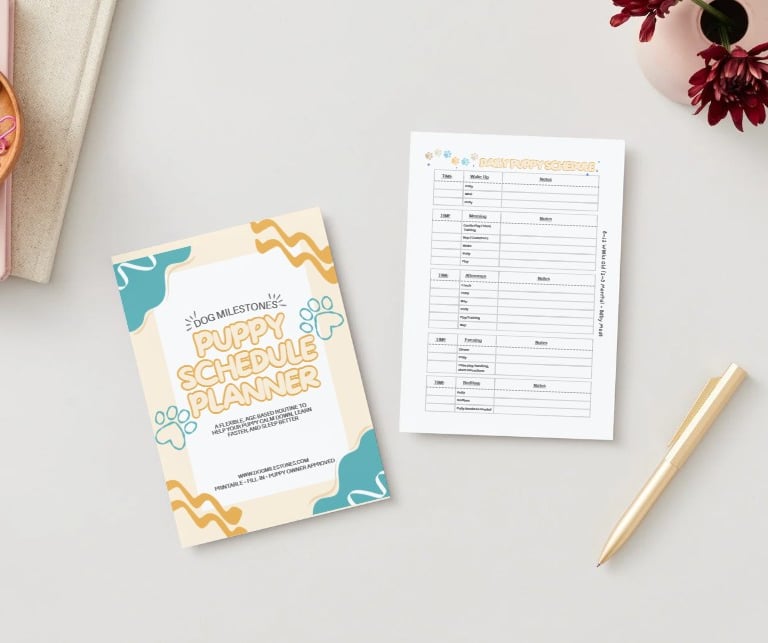
Download our free Puppy Schedule and see first hand how intentional routines help anxious puppies relax, sleep better, and feel secure.
Calm doesn’t happen by accident. It’s built, one predictable day at a time.
Its 100% ready, you just need to plug in the times.
What the PDF Includes:
• Instructions on How To Create A Schedule
• What To Expect As Your Dog Ages
• Puppy Profile - Perfect for day cares and puppy sitters/walkers
• Potty tracking
• Blank Hour-by-hour Daily Schedule
• Suggested Activities ( based on puppies age) Daily Schedule - Blank time slots to fill in
• Notes section - Track behaviors and habits. A nice way to see training progress or negative behaviors forming.
Get Started now - Download our free puppy schedule printable and customize it to your life — not someone else’s routine.
If you need more help with creating a Puppy Schedule
👉 Read → [How to Create a Realistic Puppy Schedule (By Age, Not Perfection)]
info@dogmilestones.com
Join Our Puppy Community
Get weekly puppy tips, milestone guides, and helpful resources delivered to your inbox.
Also, we’ll send over our Dog Milestones Puppy Behavior Quiz to help you with tailored advice for your pup.
SOCIALS
Dog Milestones™
Clear, compassionate guidance for your puppy's development journey.
Quick Links
Resources
© 2026 Dog Milestones. Made with ❤️ for dogs and their humans. All rights reserved.