
Puppy Milestones & Development Guide
3–4 Months:
The Exploration & Teething Phase
Share

This is when puppies become curious, mouthy, and bold.
Behavior & Emotional Development
Your puppy may test boundaries and bite more intensely as teething begins. Attention spans are still short, and impulse control is minimal.
For More Information On What Behavior To Expect at This Milestone
--> READ [Puppy Behavior Problems in the First 12 Months]
Sleep & Energy
Sleep needs remain high—usually 16–18 hours per day. Puppies who miss sleep at this age often appear hyper and “naughty.”
--> Explore calming strategies → [How to Calm an Overstimulated Puppy at Night]
--> Explore Best Sleep Habits → [Enforced Naps: The Missing Piece in Calm Puppy Training]
Training Focus
This is a great time to introduce:
Bite inhibition
Short, fun training sessions
Settle skills
Gentle leash exposure
--> Explore calming training techniques → [Teaching Settle Skills: How to Help Your Dog Truly Relax]
--> Explore calming training techniques → [Calm Dog Training Techniques: How to Raise a Confident, Well-Behaved Dog Without Harsh Discipline]
Health & Body Changes
Teething discomfort peaks. Chewing is a biological need right now, not a behavioral problem.
Common Mistake
Over-exercising to “wear them out.” This often creates an overtired, overstimulated puppy.
Its important to not that development is not linear. Progress comes in waves, not straight lines. Each phase builds on the one before it, and calm, consistent support always matters more than perfection.
Frequently asked questions
Q: Why is my puppy biting more at 3–4 months?
Teething typically begins during this stage, increasing the need to chew. Biting is normal and often peaks here.
Q: Can I start leash training at this stage?
Yes, gentle leash exposure is appropriate, focusing on positive experiences rather than distance or duration.
Q: How much sleep does a 3–4 month old puppy need?
Most puppies still require 16–18 hours of sleep daily. Overtired puppies often appear hyper or out of control.
Q: Should my puppy be fully potty trained by now?
Not yet. Accidents are still normal at this age as bladder control and routines are developing.
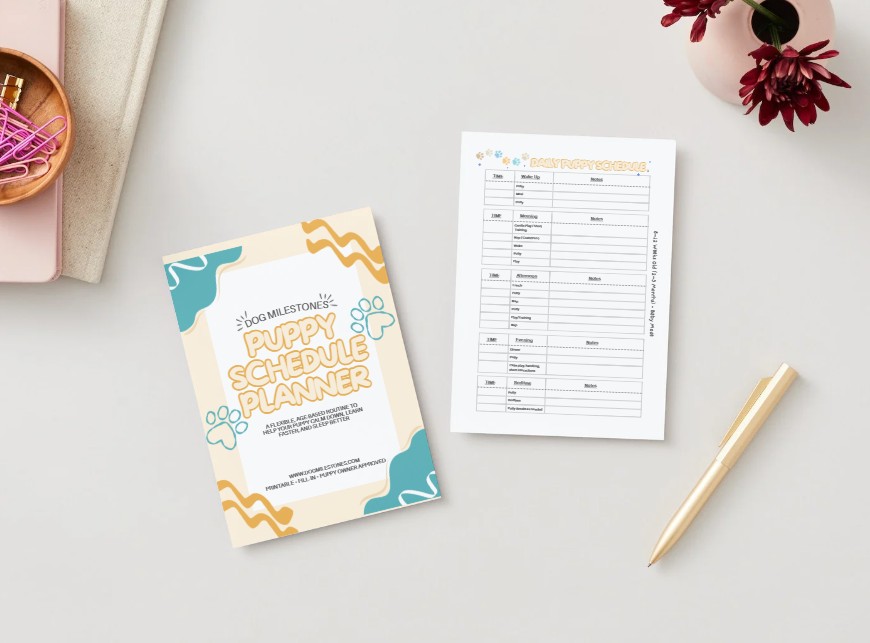
If your puppy struggles with biting, restlessness, or evening chaos,
consistency may be the missing piece — not more effort.
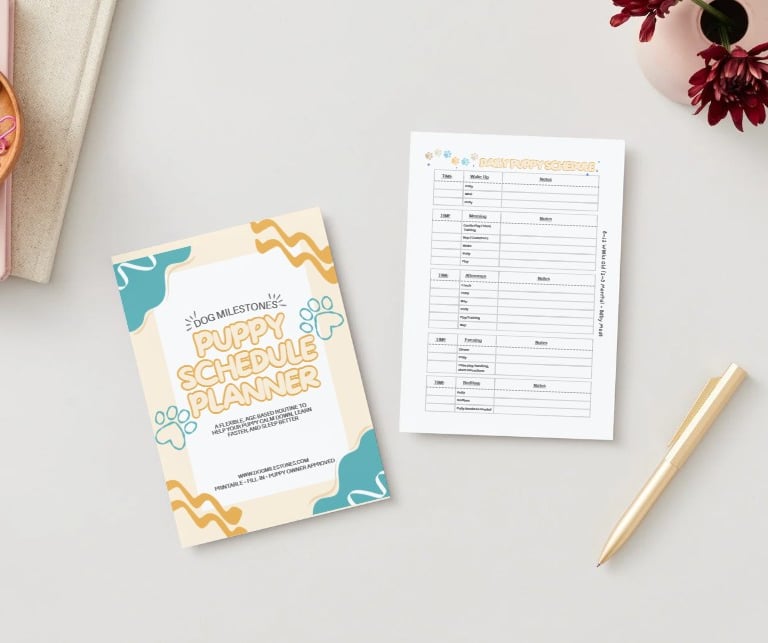
Download our free Puppy Schedule and see first hand how intentional routines help anxious puppies relax, sleep better, and feel secure.
Calm doesn’t happen by accident. It’s built, one predictable day at a time.
Its 100% ready, you just need to plug in the times.
What the PDF Includes:
• Instructions on How To Create A Schedule
• What To Expect As Your Dog Ages
• Puppy Profile - Perfect for day cares and puppy sitters/walkers
• Potty tracking
• Blank Hour-by-hour Daily Schedule
• Suggested Activities ( based on puppies age) Daily Schedule - Blank time slots to fill in
• Notes section - Track behaviors and habits. A nice way to see training progress or negative behaviors forming.
Get Started now - Download our free puppy schedule printable and customize it to your life — not someone else’s routine.
If you need more help with creating a Puppy Schedule
👉 Read → [How to Create a Realistic Puppy Schedule (By Age, Not Perfection)]
info@dogmilestones.com
Join Our Puppy Community
Get weekly puppy tips, milestone guides, and helpful resources delivered to your inbox.
Also, we’ll send over our Dog Milestones Puppy Behavior Quiz to help you with tailored advice for your pup.
SOCIALS
Dog Milestones™
Clear, compassionate guidance for your puppy's development journey.
Quick Links
Resources
© 2026 Dog Milestones. Made with ❤️ for dogs and their humans. All rights reserved.