
Calm Dog Training Techniques: How to Raise a Confident, Well-Behaved Dog Without Harsh Discipline
Learn what calm discipline really means, how to correct unwanted behaviors without fear or force, practical, step-by-step techniques you can start using today, and MORE!
1/28/20265 min read
Share Article


Training a dog doesn’t have to involve yelling, fear, or punishment. In fact, the most well-adjusted dogs are raised with calm, consistent, and humane training techniques that teach them what to do, not just what to avoid.
Calm dog training focuses on structure, predictability, and clear communication. It reduces anxiety, prevents common behavior problems, and strengthens the bond between you and your dog
—especially during puppyhood, when habits and emotional patterns are formed.
In this guide, you’ll learn:
What calm discipline really means
How to correct unwanted behaviors without fear or force
How routines, crate training, and consistency reduce anxiety
Why calm training works better long-term than harsh punishment
Practical, step-by-step techniques you can start using today
Whether you’re raising a new puppy or working with an adult dog, these principles support
every stage of your dog’s development.
What Is Calm Dog Training?
Calm dog training is a method built on structure, timing, consistency, and emotional regulation—both yours and your dog’s.
Instead of reacting emotionally to mistakes, calm training:
Redirects behavior
Prevents problems before they start
Uses predictable routines
Applies discipline only when necessary—and in a controlled, unemotional way
Dogs don’t understand lectures or delayed punishment. They learn through immediate feedback and repeated patterns. Calm training works because it matches how dogs naturally learn.
Calm Discipline vs. Harsh Punishment
Why Harsh Punishment Backfires
Yelling, hitting, or intimidating a dog may stop a behavior temporarily—but it often creates:
Fear and anxiety
Confusion
Loss of trust
Increased reactivity or avoidance]
Dogs punished harshly may stop the behavior in front of you but continue it when you’re gone
—or develop new stress-based behaviors like barking, chewing, or accidents.
What Calm Discipline Looks Like
Calm discipline:
Happens immediately, not minutes later
Is brief and unemotional
Is tied directly to the behavior—not the person
Stops once the behavior stops
The goal is not to scare your dog, but to interrupt the behavior and redirect.
Using Remote Discipline the Right Way
One of the most effective calm training tools is remote discipline—a correction that does not appear to come directly from you.
Why Remote Discipline Works
Dogs associate the correction with the behavior, not with you. This preserves trust and reduces fear.
Examples include:
A quick hand clap
A shaker can (coins or marbles in a sealed can)
A sudden noise
Tossing an object near (not at) the dog to startle
These should:
Be used sparingly
Never cause pain
Stop immediately once the behavior stops
Remote discipline is most effective when combined with clear routines and positive reinforcement.
The Power of Routine: Calm Starts With Predictability
Dogs thrive on routine. Unpredictable days create anxious dogs.
A consistent daily schedule helps your dog:
Know what to expect
Relax between activities
Learn faster
Develop emotional stability
Key Daily Anchors
Wake-up time
Feeding times
Potty breaks
Training sessions
Playtime
Nap and bedtime
When these happen at roughly the same times each day, your dog’s nervous system stays calm—and calm dogs behave better.
House Training With Calm, Structured Methods
House training is one of the biggest stress points for new puppy owners—but it doesn’t have to be.
Start Immediately
House training should begin the day your puppy comes home. Puppies want to keep their sleeping area clean, but they need help learning where to go.
Use the “Scent Post” Technique
Dogs return to familiar scents. When an accident happens:
Save a small smear of stool or urine-soaked paper
Place it where you want your puppy to eliminate
Take your puppy directly to that spot
This teaches location-based habits instead of random elimination.
Separate Potty Time and Play Time
Potty breaks should be calm and focused.
Go to the potty area
Wait quietly
Praise immediately after elimination
Return indoors
Play happens after elimination, not before.
Timing Matters More Than Punishment
If you catch an accident as it happens, calmly interrupt and guide your puppy to the correct location.
If you find it later:
Do not punish
Clean thoroughly with odor-neutralizing products
Adjust your schedule
Punishment even five minutes later is too late. Dogs live in the moment.
Positive Reinforcement Builds Confidence
Every correct behavior should be reinforced—especially early on.
Praise your dog:
Immediately
Calmly but enthusiastically
For several seconds
This teaches your dog what behaviors earn approval and builds confidence instead of fear.
Chewing: A Developmental Stage, Not Bad Behavior
Chewing is normal, especially between 4–7 months as adult teeth come in.
Instead of scolding:
Provide safe chew toys
Rotate toys to keep interest high
Redirect immediately when chewing the wrong object
Calm redirection works better than punishment for developmental behaviors.
Socialization: Calm Exposure Builds Brave Dogs
The most critical socialization window is 4–16 weeks of age.
During this time:
Expose your puppy to people, dogs, sounds, surfaces, and environments
Keep experiences positive and brief
Avoid overwhelming situations
A well-socialized puppy is less reactive, less fearful, and more adaptable for life.
Crate Training: The Foundation of Calm Independence
Crate training is one of the most powerful calm training tools when done correctly.
Why Crate Training Works
A crate:
Prevents destructive behavior
Supports house training
Creates a safe, calm retreat
Reduces separation anxiety
Dogs naturally avoid soiling their sleeping area, which accelerates house training.
Making the Crate a Positive Space
The crate should never be used for punishment.
To build positive associations:
Place treats and toys inside
Feed meals in the crate if possible
Use the crate during naps and calm periods
A covered crate can increase feelings of security for some dogs.
Crate Training Step-by-Step (Puppies)
Introduce the crate early in the day
Leave the door open initially
Reward voluntary entry
Close the door briefly during naps
Ignore mild whining
Only release when quiet
Calm behavior earns freedom. Crying does not.
Reducing Barking and Vocalization
Barking in the crate often comes from:
Overtiredness
Overstimulation
Attention-seeking
Ignore brief complaints. If barking escalates:
Use remote interruption (shaker can, noise)
Stay out of sight
Resume calm silence before release
Consistency is key.
Crate Training Adult Dogs
Adult dogs can learn crate training too:
Start with feeding near or inside the crate
Keep sessions short
Gradually increase time
Pair with calm rewards
Some dogs may prefer pens or confined rooms instead—and that’s okay.
The Long-Term Benefits of Calm Training
Dogs raised with calm, consistent training:
Are more confident
Experience less anxiety
Learn faster
Are easier to manage
Form stronger bonds with their owners
Owners experience:
Less stress
Fewer behavior problems
A happier home
Calm Training Is Not Passive—It’s Intentional
Calm training does not mean permissive parenting. It means:
Clear rules
Predictable routines
Immediate feedback
Emotional regulation
Dogs feel safest when boundaries are clear and enforced calmly.
Final Thoughts: Calm Dogs Are Created, Not Born
Most behavior problems are not personality flaws—they’re communication gaps.
When you provide:
Structure
Consistency
Clear expectations
Calm discipline
You create a dog who feels safe, confident, and eager to please.
And that’s the real milestone every dog deserves.
Consistency Creates Calm
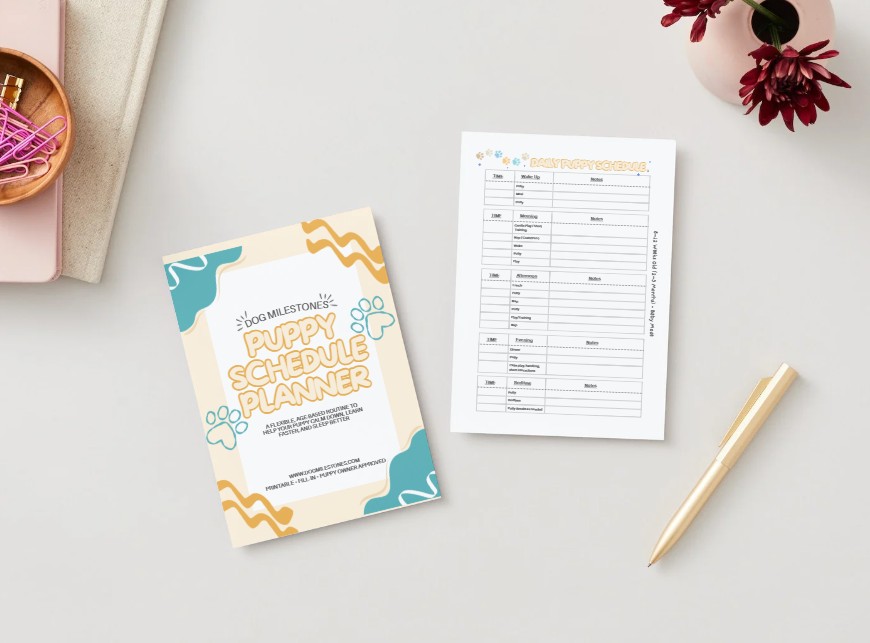
Anxious puppies don’t need more stimulation—they need structure. A predictable daily routine helps your dog relax, learn faster, and feel safe.
🎁 Download our FREE Puppy Daily Schedule and start building calm, confident habits today.




If your puppy struggles with biting, restlessness, or evening chaos,
consistency may be the missing piece — not more effort.
Download our free Puppy Schedule and see first hand how intentional routines help anxious puppies relax, sleep better, and feel secure.
Calm doesn’t happen by accident. It’s built, one predictable day at a time.
Its 100% ready, you just need to plug in the times.
What the PDF Includes:
• Instructions on How To Create A Schedule
• What To Expect As Your Dog Ages
• Puppy Profile - Perfect for day cares and puppy sitters/walkers
• Potty tracking
• Blank Hour-by-hour Daily Schedule
• Suggested Activities ( based on puppies age) Daily Schedule - Blank time slots to fill in
• Notes section - Track behaviors and habits. A nice way to see training progress or negative behaviors forming.
Get Started now - Download our free puppy schedule printable and customize it to your life — not someone else’s routine.
If you need more help with creating a Puppy Schedule
👉 Read → [How to Create a Realistic Puppy Schedule (By Age, Not Perfection)]
info@dogmilestones.com
Join Our Puppy Community
Get weekly puppy tips, milestone guides, and helpful resources delivered to your inbox.
Also, we’ll send over our Dog Milestones Puppy Behavior Quiz to help you with tailored advice for your pup.
SOCIALS
Dog Milestones™
Clear, compassionate guidance for your puppy's development journey.
Quick Links
Resources
© 2026 Dog Milestones. Made with ❤️ for dogs and their humans. All rights reserved.