
Enforced Naps: The Missing Piece in Calm Puppy Training
If your puppy struggles with biting, restlessness, or evening chaos, consistency may be the missing piece — not more effort.
1/26/20267 min read
Share Article
If your puppy becomes wild in the evenings, bites harder when tired, ignores commands they seemed to know yesterday, or spirals into zoomies that feel more frantic than playful, you are not dealing with a “bad puppy.” You are almost certainly dealing with an overtired nervous system.
One of the most misunderstood truths in puppy training is this: more exercise does not always create a calmer dog. In many cases, it does the opposite. Puppies who do not sleep enough become dysregulated, reactive, mouthy, and emotionally fragile. Enforced naps are not a shortcut or a crutch — they are a biological necessity for developing a calm, confident dog.
This is why enforced naps are often the missing piece in calm puppy training.
Why Puppies Become More Difficult When They’re Tired
Puppies are not miniature adult dogs. Their brains are still developing, their ability to self-regulate is limited, and their nervous systems fatigue quickly. When a puppy becomes overtired, stress hormones increase, impulse control drops, and learning shuts down.
This is why an overtired puppy may suddenly:
Bite harder during play
Ignore cues they previously followed
Bark or whine excessively
Appear “hyper” instead of sleepy
Seem aggressive, frantic, or out of control
To humans, this looks like excess energy. In reality, it is exhaustion without coping skills.
Just like overtired toddlers, puppies do not put themselves to sleep when they need it most. They push through fatigue until their behavior collapses. Enforced naps step in where self-regulation has not yet developed.
What Enforced Naps Actually Mean (And What They Don’t)
Enforced naps do not mean forcing a puppy into isolation or ignoring distress. They mean intentionally creating opportunities for rest before a puppy reaches meltdown mode.
An enforced nap is a planned rest period in a calm, safe environment where stimulation is reduced and sleep can happen naturally. This might be a crate, an exercise pen, a gated room, or a quiet corner — the location matters less than the emotional tone.
Importantly, enforced naps are not punishment. They are not used because a puppy misbehaved. They are used because rest is a requirement for healthy development, just like food and water.
When implemented correctly, puppies begin to welcome nap time because their bodies learn that rest brings relief.
How Much Sleep Puppies Actually Need
Most puppies require 18–20 hours of sleep per day, especially in the first several months of life. This number surprises many owners, particularly those who assume their puppy’s chaos means they need more activity.
Without sufficient sleep, training struggles no matter how consistent the owner is. Commands feel unreliable. Calm moments feel rare. Frustration builds on both sides.
Sleep is when puppies:
Process learning
Regulate emotions
Strengthen their immune system
Develop impulse control
Recover from stimulation
Skipping naps does not create resilience. It creates burnout.
The Connection Between Enforced Naps and Calm Behavior
Calm behavior is not taught only through commands — it is built through nervous system regulation. Puppies who sleep well are better able to:
Focus during training
Tolerate frustration
Respond instead of react
Recover from excitement
This is why many behavior issues dramatically improve within days of implementing a nap schedule. Biting decreases. Zoomies soften. Listening improves. The puppy begins to feel predictable instead of volatile.
When naps are consistent, calm stops being something you chase and becomes something your puppy defaults to.
When Puppies Need Enforced Naps Most
Puppies typically need enforced naps:
After training sessions
After social exposure
After play with people or dogs
In the late afternoon and evening
When biting escalates suddenly
When listening deteriorates rapidly
These are not moments to push through with more stimulation. They are signs that the nervous system needs a break.
Many owners notice that the “witching hour” disappears entirely once naps are added to the routine.
Where Enforced Naps Should Happen
The best nap location is one that feels safe, boring, and predictable. For many puppies, a crate works well because it reduces visual input and creates a den-like environment. For others, a pen or gated room is equally effective.
What matters most is that:
The environment is calm
Stimulation is minimized
The routine is consistent
The puppy is not isolated in fear
If a puppy is panicking, the setup needs adjustment. Enforced naps should reduce stress, not create it.
This is why nap training often pairs well with thoughtful crate training and gradual independence building.
How to Introduce Enforced Naps Without Resistance
Timing matters more than technique. Puppies are most receptive to naps when their needs have been met first. A short walk, a potty break, gentle play, or a brief training session helps take the edge off before rest.
Once the puppy is placed in their nap space, interaction should decrease. Talking, eye contact, and stimulation keep the nervous system active. Calm neutrality signals that it is time to power down.
Many puppies protest briefly, then fall asleep within minutes. This is not distress — it is a transition. True distress escalates, does not settle, and requires adjustment.
Over time, puppies begin to associate nap spaces with relief and safety rather than separation.
How Enforced Naps Prevent Common Training Problems
Many issues commonly blamed on training methods are actually sleep-related.
Puppies who bite excessively are often overtired. Puppies who ignore cues may be cognitively exhausted. Puppies who seem anxious or reactive may be operating on an overloaded nervous system.
Enforced naps reduce:
Puppy biting and nipping
Evening zoomies
Demand barking
Over-arousal during play
Training regression
They also improve:
Attention span
Emotional resilience
Potty training success
Crate acceptance
Overall calmness
Sleep does not replace training — it makes training possible.
The Long-Term Impact of Teaching Rest Early
Puppies who learn to rest intentionally grow into dogs who can settle in new environments, relax in busy households, and regulate themselves without constant intervention.
They learn that calm is safe. Stillness is allowed. Rest is not something to fear or fight.
This becomes especially important for:
Apartment dogs
Service and therapy dogs
Dogs prone to anxiety
High-energy or working breeds
Teaching rest early shapes a dog’s emotional foundation for life.
Why Enforced Naps Are an Act of Leadership, Not Limitation
Structure is not restrictive to puppies — it is reassuring. When owners provide clear rhythms of activity and rest, puppies no longer have to guess what comes next.
Enforced naps communicate safety. They say, “You don’t have to stay alert. I’ve got this.”
That sense of security is what allows calm behavior to emerge naturally.
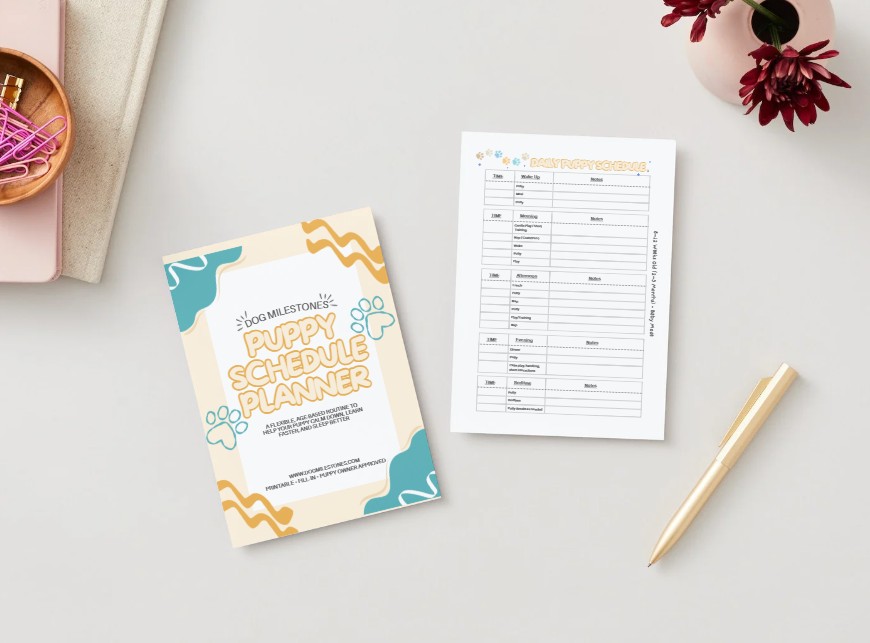
If your puppy struggles with biting, restlessness, or evening chaos,
consistency may be the missing piece — not more effort.
Download our free Puppy Schedule and see first hand how intentional routines help anxious puppies relax, sleep better, and feel secure.
Calm doesn’t happen by accident. It’s built, one predictable day at a time.
Puppy Nap FAQs
Do puppies really need enforced naps?
Yes. Puppies need far more sleep than most owners realize. Structured rest prevents overtired behaviors like biting, zoomies, whining, and anxiety.
👉 Learn how enforced naps calm overstimulated puppies → [Enforced Naps: The Missing Piece in Calm Puppy Training]
How often should a puppy nap during the day?
Most puppies need a nap every 1–2 hours of awake time, depending on age. Younger puppies require more frequent rest.
👉 See age-based schedules → [Realistic Puppy Schedule by Age]
Is biting a sign my puppy needs sleep?
Very often, yes. Sudden nipping, ignoring cues, or wild behavior are common signs of overtiredness.
👉 Read more → [Why Puppies Bite More When Tired]
Can naps help with puppy anxiety or crate crying?
Consistent nap routines reduce stress and help puppies feel safe, especially during alone time or transitions.
👉 Explore calming strategies → [How to Calm an Overstimulated Puppy at Night]

Should I force my puppy to nap?
You’re not forcing sleep — you’re providing the opportunity for rest. Puppies often push past their limits because they don’t recognize tiredness the way adult dogs do. Creating a quiet, predictable nap routine helps your puppy settle before exhaustion turns into stress or behavior problems.
Why does my puppy act worse when tired?
When puppies are overtired, their nervous system becomes overstimulated. This can show up as biting, barking, zoomies, whining, or ignoring commands. What looks like “bad behavior” is often a puppy who needs sleep, not more training or discipline.
How long should a puppy be awake before a nap?
Most young puppies can handle about 60–90 minutes of awake time before needing rest. As puppies grow, this window gradually increases. Watching your puppy’s behavior is more important than the clock — sudden hyperactivity or loss of focus usually means it’s time for a nap.
Where should my puppy take enforced naps?
Enforced naps work best in a quiet, familiar space with minimal distractions. This can be a crate, playpen, or gated area with soft bedding. The key is consistency — using the same space helps your puppy associate that environment with relaxation and sleep.
How do I know enforced naps are working?
Signs enforced naps are helping include softer play, fewer biting episodes, improved focus during training, and an easier time settling in the evening. Many owners notice their puppy becomes calmer within just a few days of consistent nap scheduling.
Do adult dogs need enforced naps too?
While adult dogs usually self-regulate better, structured rest can still be helpful during busy days, new environments, or stressful life changes. Puppies who learn healthy rest habits early are more likely to grow into calm, adaptable adult dogs.
People Also Ask:
Enforced Naps & Puppy Calmness
Can enforced naps help with puppy anxiety?
Yes. Regular, predictable rest lowers overall stress levels and helps puppies feel safer. Consistent nap routines teach puppies that calm comes after activity, which is especially helpful for anxious, sensitive, or easily overstimulated puppies.
Is it normal for my puppy to fight sleep?
Very normal. Puppies often resist sleep the same way overtired toddlers do. This doesn’t mean they don’t need rest — it usually means they need help transitioning into it through routine, calm environments, and reduced stimulation.
Can enforced naps improve nighttime sleep?
Absolutely. Puppies who get enough rest during the day are often calmer in the evening and settle more easily at bedtime. Counterintuitively, overtired puppies tend to sleep worse at night than well-rested ones.
Still Have Questions?
Can't find what you're looking for?
Check out our FAQs Page or reach out through our contact page.
info@dogmilestones.com
Join Our Puppy Community
Get weekly puppy tips, milestone guides, and helpful resources delivered to your inbox.
Also, we’ll send over our Dog Milestones Puppy Behavior Quiz to help you with tailored advice for your pup.
SOCIALS
Dog Milestones™
Clear, compassionate guidance for your puppy's development journey.
Quick Links
Resources
© 2026 Dog Milestones. Made with ❤️ for dogs and their humans. All rights reserved.