
Why My Puppy Bites My Hands vs My Clothes
Why do puppies bite hands, sleeves, and clothing? Learn the behavioral reasons behind these habits and what your puppy is trying to communicate.
3/13/20266 min read
Share Article
Many puppy owners notice an interesting pattern in their dog’s behavior.
Sometimes the puppy goes straight for hands and fingers.
Other times they target sleeves, pant legs, socks, or shoelaces.
It may seem random, but in most cases, puppies bite hands and clothing for very different reasons.
Understanding why your puppy chooses one over the other can reveal what your puppy is trying to communicate in that moment — and help you guide the behavior more effectively.
In this guide, we’ll break down why puppies target hands vs. clothing, what those behaviors usually mean, and what they tell you about your puppy’s emotional state.
(If you want a deeper overview of why puppies bite in general, read our full guide: Why Puppies Bite: The Complete Dog Owner’s Guide.)
Why Puppies Bite Hands
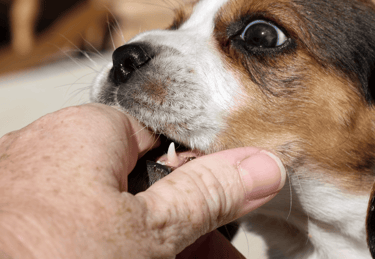
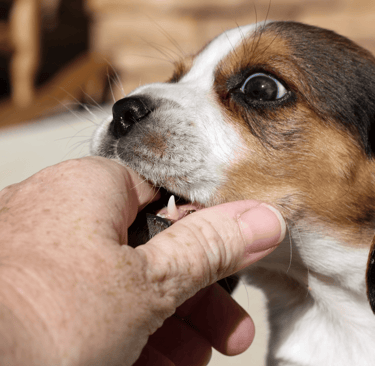
Hands are one of the most common targets for puppy biting because they are interactive and expressive.
Unlike most objects in the environment, hands move, react, and engage directly with the puppy.
This makes them extremely interesting.
Here are the most common reasons puppies target hands.
1. Hands Move and React
From a puppy’s perspective, hands are one of the most exciting objects in the environment.
They:
• move quickly
• wave during play
• pet the puppy
• grab toys
Even more importantly, hands react dramatically when bitten.
If a puppy nips a hand and the person pulls away, talks loudly, or shakes their hand, the puppy learns something powerful:
“Hands are fun to interact with.”
The reaction itself can reinforce the behavior.
2. Hands Are Associated With Play
Many puppies learn very early that hands mean playtime.
Owners often use their hands to:
• wrestle with puppies
• wiggle fingers in front of their face
• playfully push the puppy away
• encourage chasing
This teaches the puppy that hands are part of the game.
When the puppy becomes excited later, they may instinctively grab hands because they associate them with fun interaction.
3. Hands Carry Human Scent
Dogs experience the world primarily through scent.
Hands often carry strong smells from:
• food
• lotions or soaps
• other animals
• household objects
This scent information can make hands particularly interesting for puppies to explore.
Curiosity biting of hands is often gentle and investigative rather than intense.
4. Hands Appear During Exciting Moments
Hands are frequently present during moments of excitement.
For example:
• greeting the puppy
• petting during play
• offering treats
• picking up toys
Over time, puppies may associate hands with high-energy interactions, which can trigger playful mouthing.
Why Puppies Bite Clothes
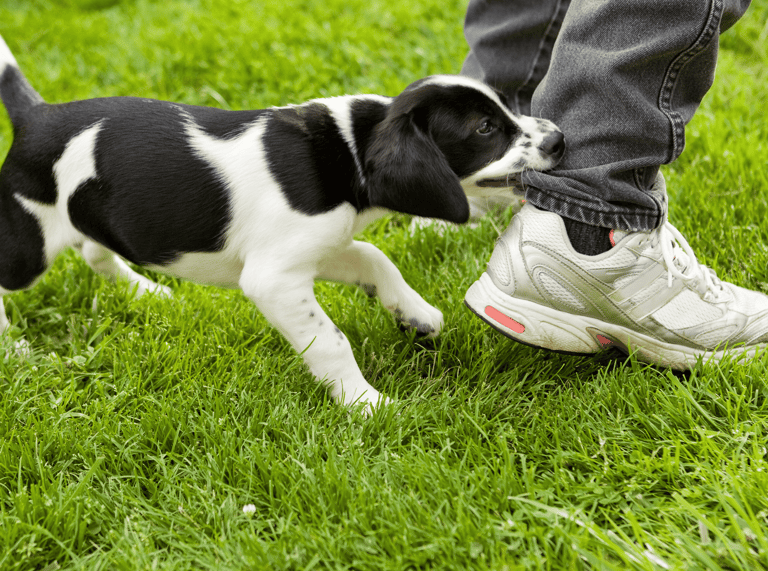
Clothing biting usually has a different motivation than hand biting.
While hands invite interaction, clothing often triggers chasing and grabbing instincts.
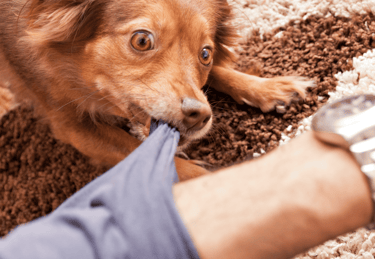
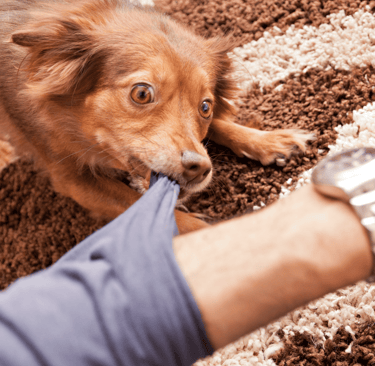
1. Clothing Moves Like Prey
Loose clothing, shoelaces, and pant legs move when people walk.
This movement activates a puppy’s natural chase instinct.
To a puppy, swinging fabric may resemble something small and moving — similar to prey behavior.
This is why puppies often bite clothing when owners:
• walk through the house
• climb stairs
• move quickly
The motion itself invites the puppy to grab.
2. Fabric Is Easy to Grab
Clothing provides something puppies can latch onto and tug.
Soft fabric gives puppies feedback that skin does not.
This makes clothing ideal for tug-style play.
Puppies may grab:
• sleeves
• pant legs
• hoodie strings
• socks
Once they latch onto fabric, the movement of the person often creates a tug-of-war effect.
3. Clothing Triggers Herding Instincts
Some puppies instinctively grab moving clothing because it mimics herding behavior.
Herding breeds were historically bred to control livestock by chasing and nipping moving animals.
When people walk past, the puppy may respond instinctively by grabbing:
• heels
• pant legs
• ankles
This behavior is particularly common in energetic working breeds.
4. Clothing Appears During Transitions
Another pattern many owners notice is that puppies bite clothing during movement transitions.
For example:
• when owners stand up
• when someone walks away
• when leaving a room
These transitions often trigger excitement or curiosity, leading the puppy to grab the nearest moving object.
When Puppies Bite Both Hands and Clothes
Some puppies bite both hands and clothing interchangeably.
This usually happens when the puppy is experiencing high excitement or overstimulation.
In these moments, the puppy may grab whatever is closest.
Common triggers include:
• intense play sessions
• evening energy spikes
• overtiredness
• chaotic environments
When puppies become overstimulated, their impulse control temporarily drops.
This can lead to rapid nipping at anything nearby.
The Hidden Factor: Reinforcement
One of the most overlooked reasons puppies repeatedly bite certain things is unintentional reinforcement.
If biting hands leads to play, attention, or movement, the puppy may repeat the behavior.
If grabbing clothing causes the person to move faster or react dramatically, that also becomes part of the game.
From the puppy’s perspective, these behaviors work.
Understanding reinforcement patterns can help owners guide puppies toward more appropriate play choices.
Why Some Puppies Prefer One Target Over the Other
Every puppy has individual preferences.
Some puppies prefer hands because they enjoy social interaction.
Others prefer clothing because they love chasing and tugging.
Factors that influence these preferences include:
• breed tendencies
• energy level
• play style
• environment
• previous reinforcement
Paying attention to what triggers your puppy’s biting can provide valuable clues about what they are experiencing in that moment.
The Good News: This Phase Is Temporary
While biting hands or clothing can feel frustrating, it is a very common stage in puppy development.
As puppies grow, they gradually develop:
• stronger impulse control
• improved communication skills
• better understanding of boundaries
Combined with consistent training and structure, most puppies significantly reduce biting behavior as they mature.
With patience and guidance, the playful puppy who once grabbed everything in sight eventually becomes a dog who understands how to interact calmly with people.
Continue Learning About Puppy Biting
If you're trying to understand why your puppy bites in different situations, these articles can help:
• Why Puppies Bite: The Complete Dog Owner’s Guide
• 10 Reasons Puppies Bite (Explained by Behavior Type)
• Puppy Biting vs. Aggression: How to Tell the Difference
Each article explains different aspects of puppy biting behavior and how it develops during early puppyhood.
Want a Complete Step-by-Step Puppy Biting System?
This article explains why puppy biting happens.
But most owners also want to know:
• What do I do today when my puppy bites nonstop?
• How do I stop ankle attacks while walking through the house?
• How do I teach gentle mouths step-by-step?
• How do I prevent biting from becoming a long-term habit?
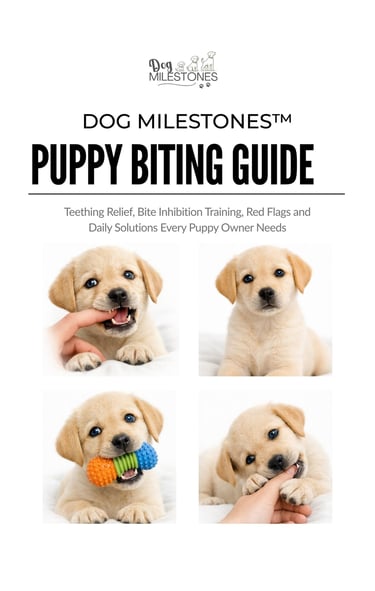
That is exactly why the Dog Milestones Puppy Biting Guide series was created.
Inside the Dog Milestones™ Puppy Biting Guide series you will learn:
✔ Why puppies bite (and what most advice gets wrong)
✔ The daily routines that reduce biting dramatically
✔ How to teach bite inhibition the right way
✔ What to do during peak teething weeks
✔ The common mistakes that accidentally make biting worse
Instead of random tips, you’ll get a clear, step-by-step system used by
thousands of dog owners to survive the puppy biting stage with confidence.
WHAT'S NEXT:
Explore the Dog Milestones™ Puppy Potty Training Guide → (Book Series Coming Soon)
If your puppy struggles with biting, restlessness, or evening chaos,
consistency may be the missing piece — not more effort.
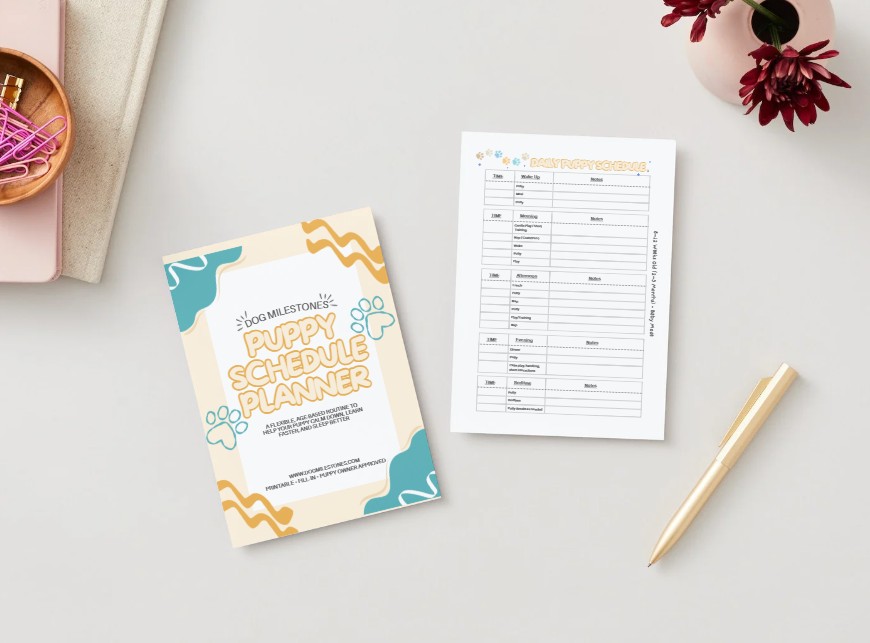
Download our free Puppy Schedule and see first hand how intentional routines help anxious puppies relax, sleep better, and feel secure.
Calm doesn’t happen by accident. It’s built, one predictable day at a time.
Its 100% ready, you just need to plug in the times.
What the PDF Includes:
• Instructions on How To Create A Schedule
• What To Expect As Your Dog Ages
• Puppy Profile - Perfect for day cares and puppy sitters/walkers
• Potty tracking
• Blank Hour-by-hour Daily Schedule
• Suggested Activities ( based on puppies age) Daily Schedule - Blank time slots to fill in
• Notes section - Track behaviors and habits. A nice way to see training progress or negative behaviors forming.
Get Started now - Download our free puppy schedule printable and customize it to your life — not someone else’s routine.
If you need more help with creating a Puppy Schedule
👉 Read → [How to Create a Realistic Puppy Schedule (By Age, Not Perfection)]
info@dogmilestones.com
Join Our Puppy Community
Get weekly puppy tips, milestone guides, and helpful resources delivered to your inbox.
Also, we’ll send over our Dog Milestones Puppy Behavior Quiz to help you with tailored advice for your pup.
SOCIALS
Dog Milestones™
Clear, compassionate guidance for your puppy's development journey.
Quick Links
Resources
© 2026 Dog Milestones. Made with ❤️ for dogs and their humans. All rights reserved.