
Why Some Puppies Bite More Than Others
Some puppies seem much bitey than others. Learn how breed traits, energy levels, development, and environment influence puppy biting intensity.
3/18/20266 min read
Share Article
If you’ve ever watched other puppies play calmly while your puppy seems determined to bite everything in sight, you’re not alone.
Many new dog owners wonder:
“Why does my puppy bite so much more than other puppies?”
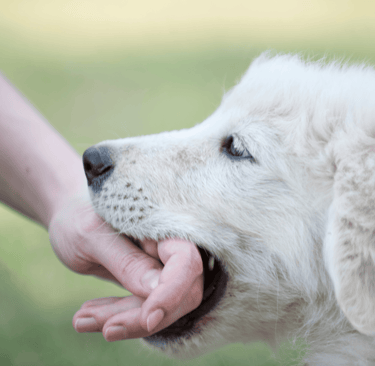
Some puppies seem to mouth gently and settle quickly, while others behave like tiny “landsharks,” constantly grabbing hands, clothing, or ankles.
This difference can make owners worry that something is wrong with their puppy.
The truth is that puppy biting intensity varies widely, and several factors influence how mouthy a puppy becomes during early development.
Understanding these factors can help you interpret your puppy’s behavior more clearly and guide them toward calmer habits.
(If you’re looking for a complete explanation of why puppies bite in the first place, start with our pillar guide: Why Puppies Bite: The Complete Dog Owner’s Guide.)
Puppies Have Different Temperaments
Just like people, puppies are born with different personalities.
Some puppies are naturally:
• calm
• observant
• gentle
• cautious
Others are more:
• energetic
• impulsive
• playful
• bold
These personality differences can strongly influence how much a puppy bites during play and exploration.
A confident, energetic puppy may interact with the world more physically, which can lead to more frequent mouthing and nipping.
Meanwhile, a calmer puppy may explore more slowly and appear less mouthy.
Neither personality type is “better” — they simply require different guidance.
Breed Genetics Play a Role
Breed tendencies can significantly affect how puppies interact with their environment.
Certain breeds were historically developed for jobs that involved using their mouths frequently.
For example:
Retrievers
Were bred to gently carry objects in their mouths.
Herding breeds
Often use nipping behavior to control movement.
Terriers
Were bred to chase and grab small animals.
Because of these instincts, puppies from certain breeds may naturally display more mouth-oriented behaviors.
This doesn’t mean the puppy is aggressive — it simply reflects their genetic heritage.
Energy Level Differences
Puppies with high energy levels often bite more simply because they are more physically active.
Energetic puppies tend to:
• play harder
• chase more frequently
• engage in rougher interaction
When energy levels rise, impulse control can temporarily decrease.
This is why high-energy puppies often appear more mouthy during active play sessions.
Understanding your puppy’s energy level can help you anticipate when biting may occur.
Age and Development Stage
Another important factor is the puppy’s age.
Puppy biting tends to follow a developmental pattern.
Many puppies show the most intense biting behavior during the 3–4 month stage, when teething begins and curiosity peaks.
During this time puppies are:
• exploring their environment
• learning social skills
• experiencing gum discomfort
• testing boundaries
As puppies mature and gain impulse control, biting behavior usually decreases.
Early Social Experiences
The amount of time a puppy spends with their littermates also influences biting behavior.
When puppies play together, they constantly practice bite inhibition — the ability to control the pressure of their bite.
If a puppy bites too hard, the other puppy yelps and stops playing.
This feedback teaches puppies to soften their bite.
Puppies that leave their litter too early may miss part of this learning process, which can lead to stronger or more frequent biting during early development.
Learning History
Puppies quickly learn which behaviors get attention.
If biting leads to interaction, play, or movement, puppies may repeat the behavior more often.
For example, when a puppy bites a hand or sleeve, the owner may:
• pull their hand away quickly
• talk loudly
• move around more
These reactions can unintentionally make the behavior more exciting.
Over time, the puppy learns that biting creates engagement.
This learning pattern can make some puppies appear more mouthy than others.
Environment and Stimulation
A puppy’s environment can strongly influence their behavior.
Busy households with lots of movement, noise, and activity can increase excitement levels.
When stimulation rises, puppies may show more:
• chasing
• jumping
• nipping
• grabbing clothing
Meanwhile, puppies raised in calmer environments may appear less mouthy simply because their stimulation levels are lower.
Sleep and Overtiredness
One of the most overlooked causes of excessive puppy biting is lack of sleep.
Young puppies need a surprising amount of rest — often 18 to 20 hours per day.
When puppies become overtired, they can lose impulse control and start biting more intensely.
This often happens during the evening when puppies are exhausted but still stimulated by activity in the home.
Many owners misinterpret this behavior as aggression when it is actually a sign that the puppy needs rest.
Emotional Development
Puppies are still learning how to manage their emotions.
When they feel overwhelmed, frustrated, or overly excited, they may respond with mouthy behavior.
These emotional responses are part of the puppy’s learning process.
Over time, as puppies develop better emotional regulation, these reactions usually become less intense.
Individual Learning Speed
Just like children, puppies develop skills at different speeds.
Some puppies quickly learn how to control their bite pressure and calm themselves during play.
Others require more time and guidance.
This difference does not mean the puppy is difficult or stubborn.
It simply reflects the pace at which they are learning new social skills.
The Good News: Puppy Biting Is Temporary
Although some puppies bite more frequently than others, this stage is rarely permanent.
As puppies grow, several developmental changes help reduce biting behavior:
• improved impulse control
• stronger emotional regulation
• completed teething
• increased understanding of boundaries
With consistent guidance and patience, even the most energetic puppy can learn to interact gently.
Continue Learning About Puppy Biting
If you’re trying to understand your puppy’s behavior more deeply, these guides can help:
• Why Puppies Bite: The Complete Dog Owner’s Guide
• Puppy Biting During Play — What It Really Means
• Why Puppies Bite Feet and Ankles (And How to Stop It)
Each article explains different aspects of puppy biting behavior and what they mean during early development.


Want a Complete Step-by-Step Puppy Biting System?
This article explains why puppy biting happens.
But most owners also want to know:
• What do I do today when my puppy bites nonstop?
• How do I stop ankle attacks while walking through the house?
• How do I teach gentle mouths step-by-step?
• How do I prevent biting from becoming a long-term habit?
That is exactly why the Dog Milestones Puppy Biting Guide series was created.
Inside the Dog Milestones™ Puppy Biting Guide series you will learn:
✔ Why puppies bite (and what most advice gets wrong)
✔ The daily routines that reduce biting dramatically
✔ How to teach bite inhibition the right way
✔ What to do during peak teething weeks
✔ The common mistakes that accidentally make biting worse
Instead of random tips, you’ll get a clear, step-by-step system used by
thousands of dog owners to survive the puppy biting stage with confidence.
WHAT'S NEXT:
Explore the Dog Milestones™ Puppy Potty Training Guide → (Book Series Coming Soon)
If your puppy struggles with biting, restlessness, or evening chaos,
consistency may be the missing piece — not more effort.
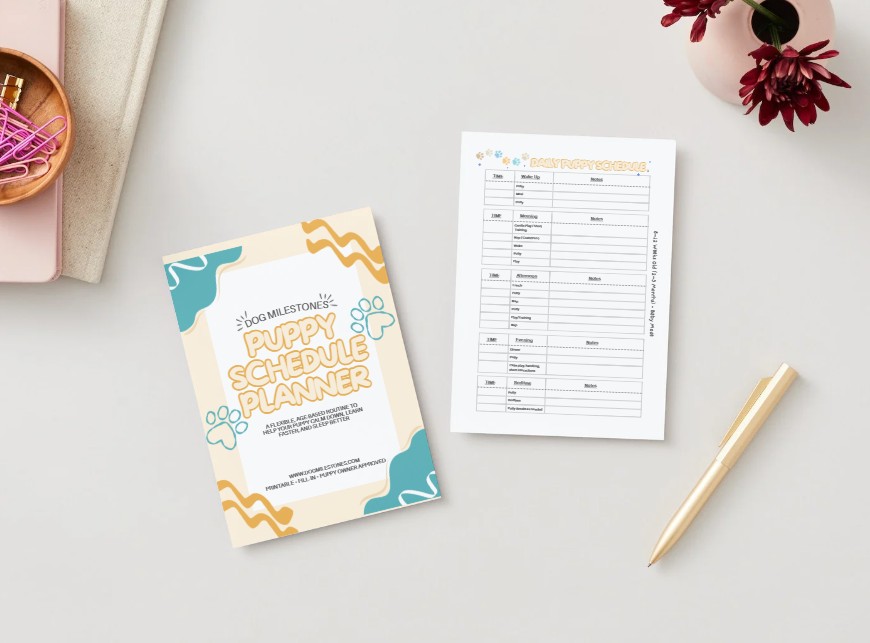
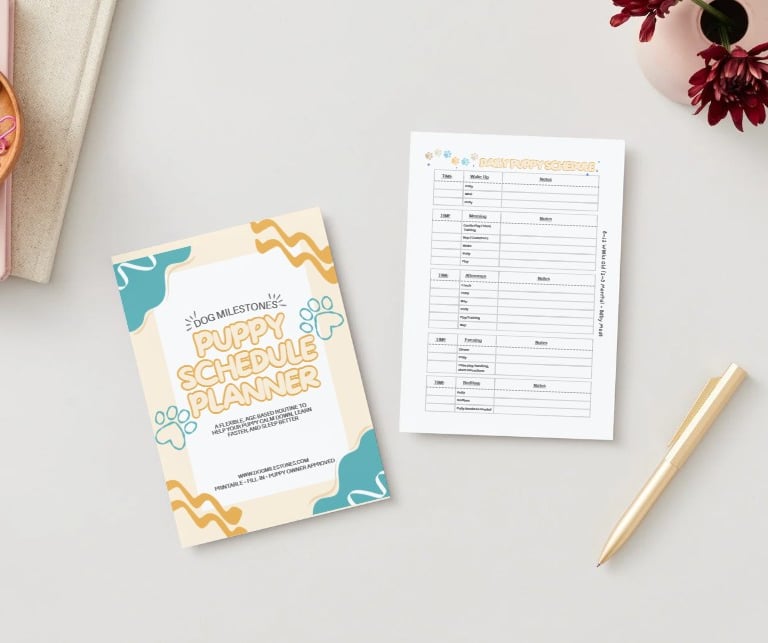
Download our free Puppy Schedule and see first hand how intentional routines help anxious puppies relax, sleep better, and feel secure.
Calm doesn’t happen by accident. It’s built, one predictable day at a time.
Its 100% ready, you just need to plug in the times.
What the PDF Includes:
• Instructions on How To Create A Schedule
• What To Expect As Your Dog Ages
• Puppy Profile - Perfect for day cares and puppy sitters/walkers
• Potty tracking
• Blank Hour-by-hour Daily Schedule
• Suggested Activities ( based on puppies age) Daily Schedule - Blank time slots to fill in
• Notes section - Track behaviors and habits. A nice way to see training progress or negative behaviors forming.
Get Started now - Download our free puppy schedule printable and customize it to your life — not someone else’s routine.
If you need more help with creating a Puppy Schedule
👉 Read → [How to Create a Realistic Puppy Schedule (By Age, Not Perfection)]
info@dogmilestones.com
Join Our Puppy Community
Get weekly puppy tips, milestone guides, and helpful resources delivered to your inbox.
Also, we’ll send over our Dog Milestones Puppy Behavior Quiz to help you with tailored advice for your pup.
SOCIALS
Dog Milestones™
Clear, compassionate guidance for your puppy's development journey.
Quick Links
Resources
© 2026 Dog Milestones. Made with ❤️ for dogs and their humans. All rights reserved.