
The Biology of Puppy Biting: Why Puppies Use Their Mouths (And How to Survive the Landshark Phase)
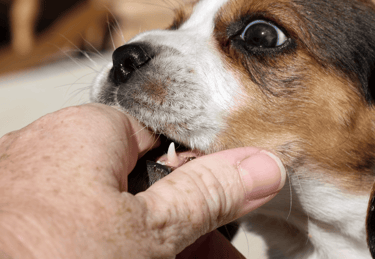
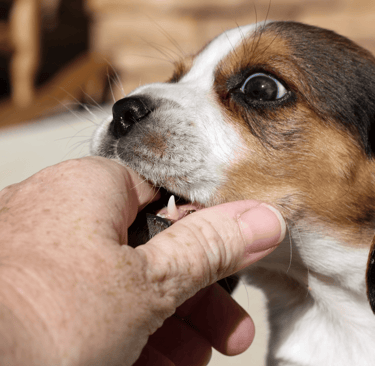
“Why does my puppy keep biting me?” Puppy biting is not misbehavior. It is biology.
3/2/20266 min read
Share Article
Every new puppy owner eventually asks the same question:
“Why does my puppy keep biting me?”
At first, it feels personal. You bring home a sweet, sleepy puppy, and within weeks that same puppy begins chasing ankles, grabbing sleeves, and testing the durability of everything in your home with tiny needle-sharp teeth. It can feel confusing, frustrating, and sometimes discouraging—especially when you’re doing everything “right.”
Here is the truth most experienced trainers, veterinarians, and breeders agree on:
Puppy biting is not misbehavior. It is biology.
Understanding the science behind puppy mouthing is the single most powerful step toward solving it calmly, effectively, and permanently. This guide will walk you through the biology of puppy biting, why puppies use their mouths instead of hands, what the developmental timeline looks like, and exactly how to manage the biting phase successfully.
Why Puppies Use Their Mouths Instead of Hands
Humans interact with the world using hands. Puppies do not have that advantage. From the moment they begin exploring, the mouth becomes their primary learning tool.
Puppies use their mouths to:
• Identify textures (soft, hard, flexible)
• Explore scent and taste
• Test strength and resistance
• Engage in social play
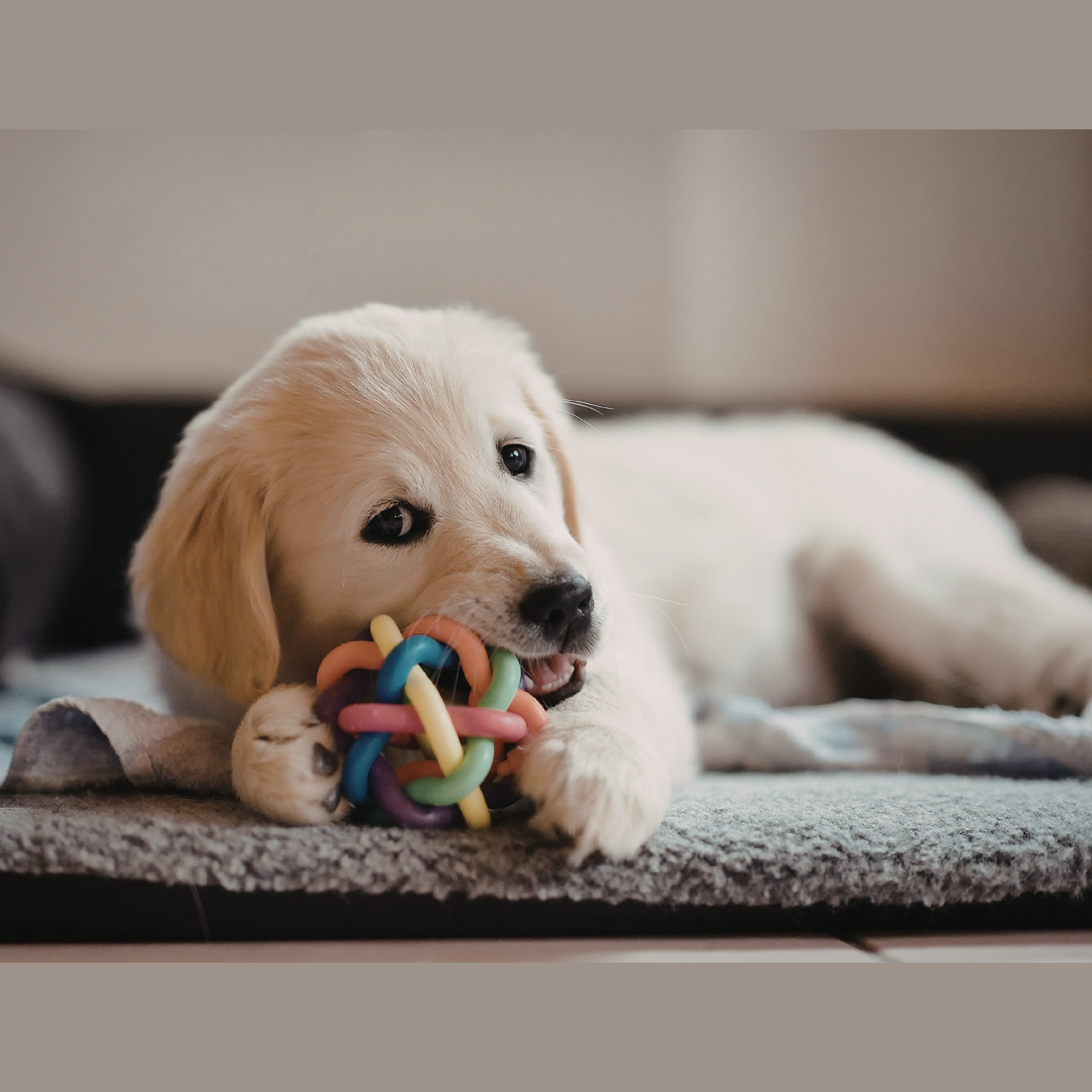
• Relieve teething discomfort
• Communicate excitement or curiosity
In neurological development, puppies experience a rapid sensory-learning phase between 8–16 weeks, when their brains are actively mapping environmental feedback. Mouthing objects—and people—is not random behavior. It is the canine equivalent of a child touching everything within reach.
This is why even the calmest puppies suddenly appear to “bite everything.” Their brains are wired to gather information through the mouth.
The Three Biological Drivers of Puppy Biting
1. Exploration and Sensory Learning
Young puppies investigate their world through oral exploration. When they bite something, they instantly learn:
• How it feels
• How it reacts
• Whether it moves
• Whether it triggers attention
If the object moves, squeaks, or causes people to react, the behavior becomes even more interesting. This is why hands, shoelaces, socks, and clothing often become favorite targets—they respond dramatically.
2. Teething Pain and Gum Pressure
Between 12–16 weeks, puppies begin losing baby teeth while adult teeth develop beneath the gums. This creates inflammation, pressure, and soreness. Chewing provides relief, much like teething toys help human babies.
During this stage, biting often appears worse before it improves, because:
• Gum discomfort increases chewing drive
• Puppies are gaining confidence and energy
• Sensory curiosity peaks simultaneously
Many owners believe training “stopped working” at this stage. In reality, biology temporarily becomes louder than training.
3. Social Play and Bite Inhibition Development
Puppies are born without understanding how hard they can bite. Through play with littermates, they learn bite pressure control. When one puppy bites too hard, the other yelps and stops playing. That pause teaches the biting puppy an important lesson:
“If I bite too hard, the fun stops.”
This process is called bite inhibition, and it is one of the most critical safety skills a dog ever learns.
How Long the Puppy Biting Phase Lasts
Most puppies experience heavy mouthing between 8 weeks and 6 months, with peak intensity around 3–4 months of age. By 6–7 months, once adult teeth are fully in and bite inhibition training has progressed, biting typically begins to decrease significantly.
However, biting can persist into adolescence if:
The puppy never learned bite inhibition
The behavior was accidentally reinforced
The dog lacks appropriate chew outlets
Exercise, sleep, or mental stimulation needs are unmet
This is why early guidance matters. Puppies do not automatically “grow out of” biting. They grow out of biting when development and training meet at the right time.
How to Handle the Puppy Biting Phase Successfully
Teach Bite Inhibition First
Before teaching a puppy to bite less often, teach them to bite more gently. If a puppy mouths too hard:
• Pause interaction immediately
• Calmly withdraw attention
• Resume play once calm behavior returns
This mirrors how puppies naturally learn from each other.
Redirect Immediately to Appropriate Chew Items
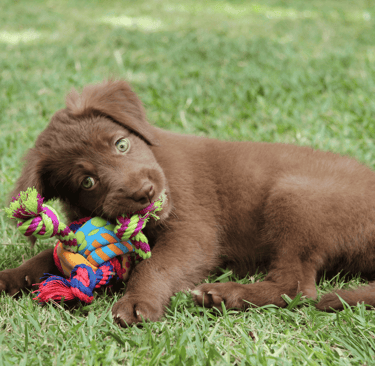
Keep toys within reach at all times. When biting begins, calmly redirect the puppy to a toy rather than reacting emotionally. Consistency teaches the puppy what is acceptable to chew.
End Play When Biting Escalates
If biting continues, stop the interaction completely for 20–60 seconds. Puppies quickly learn that biting makes fun disappear, while gentle behavior keeps play going.
Prioritize Sleep and Routine
Overtired puppies bite more intensely. Many owners are surprised to discover that biting “problems” dramatically improve after scheduled naps.
Reinforce Calm Behavior
Owners often correct biting but forget to reward calm moments. Praise, treats, or gentle affection when the puppy relaxes teaches them what behavior earns attention.
The Most Common Mistakes That Make Puppy Biting Worse
Even well-meaning owners sometimes unknowingly reinforce biting by:
• Wrestling with hands during play
• Pulling hands away quickly (which triggers chase instincts)
• Laughing or reacting dramatically to bites
• Allowing inconsistent rules between family members
• Ignoring overtired behavior
Small environmental adjustments often solve biting faster than repeated verbal corrections.
When Puppy Biting May Need Professional Help
While most puppy biting is normal, you should consult a trainer or veterinary behavior professional if:
• Bites frequently break skin
• Biting is accompanied by stiff body posture, growling, or guarding
• Behavior escalates despite consistent training
• The puppy appears fearful or defensive
Early professional guidance prevents long-term behavioral issues.
Why Understanding Biology Changes Everything
Many owners attempt to stop puppy biting emotionally instead of strategically. When you understand that biting is driven by development, teething, exploration, and social learning, your response naturally becomes calmer and more effective.
Instead of asking:
“Why is my puppy doing this to me?”
You begin asking:
“What stage of development is my puppy in, and how do I guide them through it?”
That shift transforms frustration into confidence.


Final Encouragement for New Puppy Owners
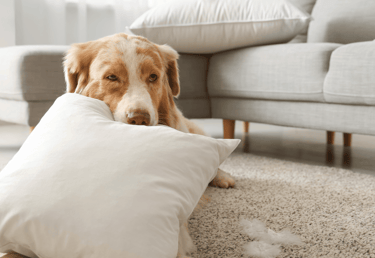
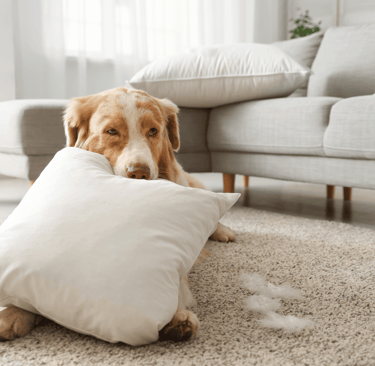
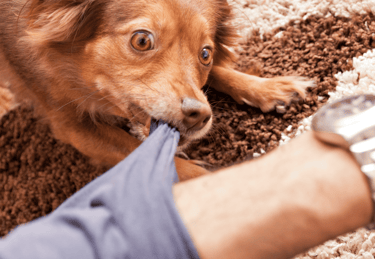
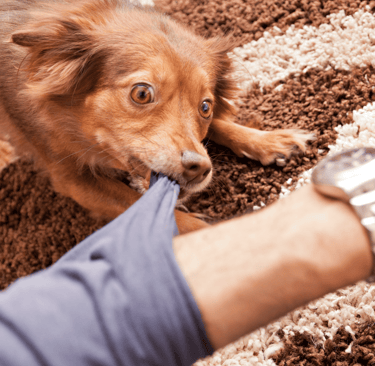
If your puppy feels like a tiny shark right now, you are not failing. You are simply witnessing one of the most normal developmental stages in canine growth. With patience, consistency, structure and the right guidance, this phase passes—and often faster than owners expect.
The biting stage is temporary.
The training habits you build during it last a lifetime.
And once you understand the biology behind puppy biting, everything begins to make much more sense.
Want a deeper understanding? Read the following articles to aide you in your quest.
• Why My Puppy Bites More When Tired
• Signs Your Puppy Needs More Sleep (Not More Exercise)
Want a Complete Step-by-Step Puppy Biting System?
This article explains why puppy biting happens.
But most owners also want to know:
• What do I do today when my puppy bites nonstop?
• How do I stop ankle attacks while walking through the house?
• How do I teach gentle mouths step-by-step?
• How do I prevent biting from becoming a long-term habit?
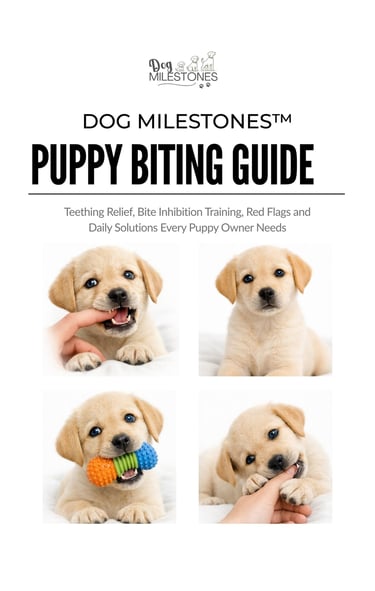
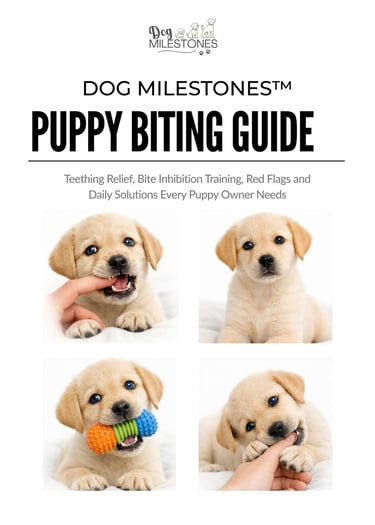
That is exactly why the Dog Milestones Puppy Biting Guide series was created.
Inside the Dog Milestones™ Puppy Biting Guide series you will learn:
✔ Why puppies bite (and what most advice gets wrong)
✔ The daily routines that reduce biting dramatically
✔ How to teach bite inhibition the right way
✔ What to do during peak teething weeks
✔ The common mistakes that accidentally make biting worse
Instead of random tips, you’ll get a clear, step-by-step system used by
thousands of dog owners to survive the puppy biting stage with confidence.
WHAT'S NEXT:
Explore the Dog Milestones™ Puppy Potty Training Guide → (Book Series Coming Soon)
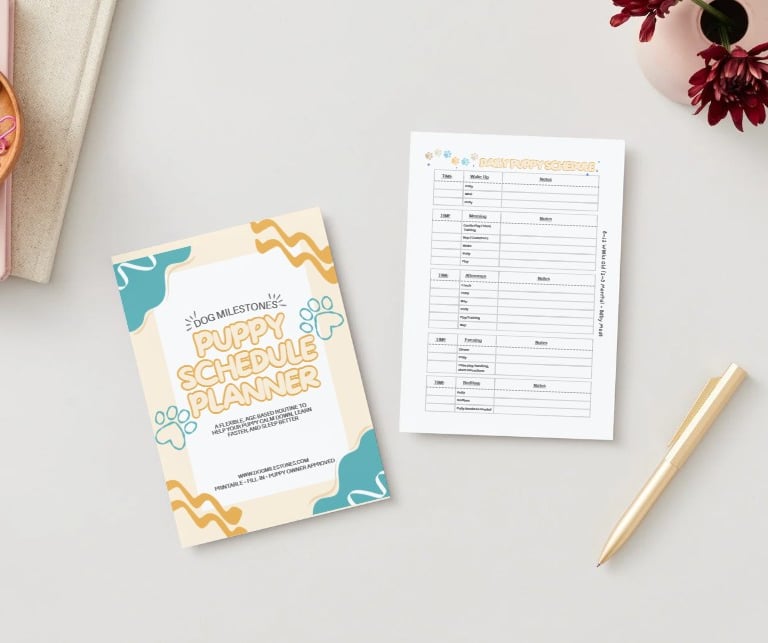
If your puppy struggles with biting, restlessness, or evening chaos,
consistency may be the missing piece — not more effort.
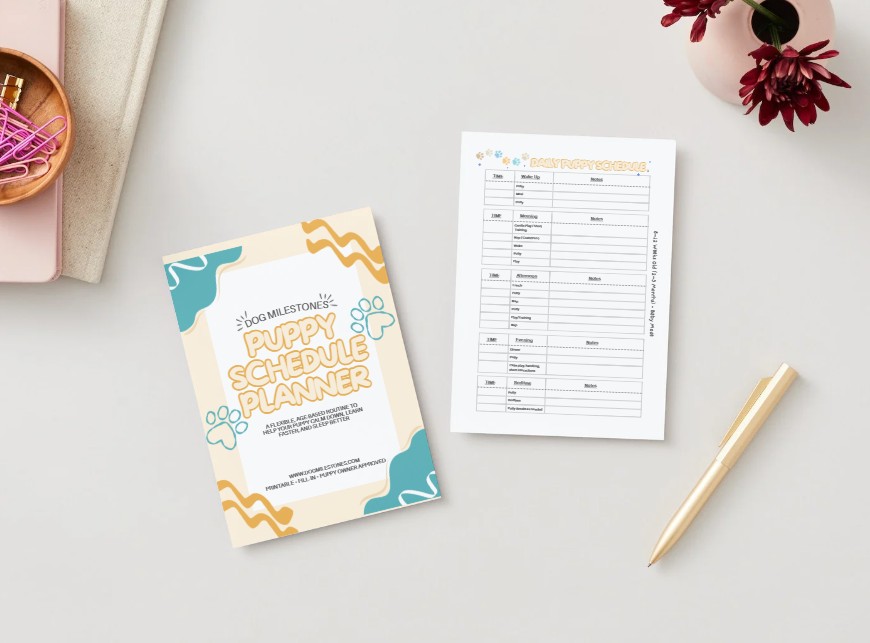
Download our free Puppy Schedule and see first hand how intentional routines help anxious puppies relax, sleep better, and feel secure.
Calm doesn’t happen by accident. It’s built, one predictable day at a time.
Its 100% ready, you just need to plug in the times.
What the PDF Includes:
• Instructions on How To Create A Schedule
• What To Expect As Your Dog Ages
• Puppy Profile - Perfect for day cares and puppy sitters/walkers
• Potty tracking
• Blank Hour-by-hour Daily Schedule
• Suggested Activities ( based on puppies age) Daily Schedule - Blank time slots to fill in
• Notes section - Track behaviors and habits. A nice way to see training progress or negative behaviors forming.
Get Started now - Download our free puppy schedule printable and customize it to your life — not someone else’s routine.
If you need more help with creating a Puppy Schedule
👉 Read → [How to Create a Realistic Puppy Schedule (By Age, Not Perfection)]
info@dogmilestones.com
Join Our Puppy Community
Get weekly puppy tips, milestone guides, and helpful resources delivered to your inbox.
Also, we’ll send over our Dog Milestones Puppy Behavior Quiz to help you with tailored advice for your pup.
SOCIALS
Dog Milestones™
Clear, compassionate guidance for your puppy's development journey.
Quick Links
Resources
© 2026 Dog Milestones. Made with ❤️ for dogs and their humans. All rights reserved.