

What to Expect From Birth Through Adulthood—and How to Feed for Lifelong Health
Feeding habits evolve constantly during the first year of a dog’s life, and understanding those changes makes it far easier to support healthy growth.
2/9/202610 min read
Share Article
Feeding a puppy can feel surprisingly complicated. One day they inhale their meals, the next they sniff and walk away. Portions change. Schedules shift. Advice conflicts. And suddenly, something as simple as feeding your furry friend feels like a major responsibility.
The truth is this: feeding habits evolve constantly during the first year of a dog’s life, and understanding those changes makes it far easier to support healthy growth, steady behavior, and long-term well-being.
Puppies don’t just need calories — they need timing, balance, and consistency. Feeding is about more than nutrition; it plays a key role in digestion, blood sugar regulation, development, training success, and even emotional stability.
Let’s walk through what to expect, stage by stage, and how to make thoughtful feeding choices that support your dog from puppyhood into adulthood.
The Neonatal Stage: Nutrition as Survival (0–4 Weeks)
In the earliest weeks of life, feeding isn’t about routine — it’s about survival and development.
Newborn puppies are entirely dependent on their mother’s milk or a proper canine milk replacement. Their bodies are still learning how to regulate temperature, blood sugar, digestion, and hydration. Because their gastrointestinal tract is sterile at birth, early feeding plays a crucial role in colonizing the gut with healthy bacteria, building immunity, and allowing nutrients to be absorbed properly.
During this stage, puppies should gain weight daily. Consistent weight gain is one of the most reliable indicators that feeding is adequate and that the puppy is healthy. Missed feedings or poor milk intake can quickly lead to hypoglycemia, dehydration, or illness because neonates have almost no energy reserves.
Milk composition naturally changes to meet a growing puppy’s needs, supplying not only calories but also antibodies, hormones, and digestive support. For this reason, maternal milk is ideal whenever possible.
For dog owners, this stage is usually managed by breeders or rescues, but it’s important to understand that early feeding patterns influence long-term development, including digestion, metabolism, and immune health.
Weaning and Early Transitions: Learning to Eat (3–8 Weeks)
As puppies approach three to four weeks of age, their nutritional needs begin to shift. Milk alone is no longer sufficient, and the weaning process begins.
This is when puppies start learning how to eat solid food. Meals are introduced gradually, often as a soft, porridge-like mixture of high-quality puppy food and water. Feeding is frequent, and digestion is still sensitive.
At this stage, puppies are not meant to self-regulate. They benefit from structured feeding times, gentle separation from mom before meals, and food that is easy to digest and high in protein and fat to support rapid growth.
Early feeding experiences matter. Puppies that are rushed, overwhelmed, or inconsistently fed during weaning may develop picky eating habits or digestive sensitivity later in life.
The Young Puppy Months: Fueling Growth and Stability (8 Weeks–4 Months)
Once puppies come home, feeding becomes the owner’s responsibility — and this is where confusion often starts.
During these months, puppies typically eat three to four meals per day. Their stomachs are small, their energy needs are high, and their blood sugar can drop quickly if meals are skipped or delayed.
Timed feedings are especially important here. Consistent meal schedules help:
• Regulate digestion
• Support stable energy levels
• Reduce accidents in the house
• Improve training focus
• Prevent grazing habits that lead to picky eating
Free-feeding may seem convenient, but for puppies it often leads to inconsistent intake, difficulty with house training, and challenges recognizing hunger and fullness cues.
Choosing the right food matters deeply at this stage. Puppy-specific formulas for different breed sizes ( ie. toy, small, medium, large, giant) are designed to provide the correct balance of protein, fat, calcium, and phosphorus for growing bones and developing organs. Feeding adult food too early — or choosing food not appropriate for a puppy’s breed size — can increase the risk of skeletal issues, especially in large and giant breeds.
Note: It is important to ask breeders all about your puppies current diet. Consistency in their diet matters.
Here are a few sample questions:
• What are you currently feeding the puppies? (Ask for the specific brand and formula)
• Are the puppies currently eating a kibble, raw, or mixed diet?
• Will you be supplying any of this food for the transition?
• What is your recommended feeding schedule and current portions?
• How have the puppies done on this diet (e.g., stool quality, growth)?
• Do you have any dietary restrictions or recommendations based on the parents' health?
Middle Puppyhood: Appetite Changes and Portion Awareness (4–9 Months)
As puppies grow, their feeding habits often change in ways that surprise owners.
Growth spurts can cause sudden increases in appetite. At times teething, developmental shifts, or hormonal changes may temporarily reduce interest in food. This fluctuation is normal — but consistency is still key.
Most puppies transition to three meals per day, and eventually to two. Portions should be adjusted gradually based on body weight/condition, not just age or appetite.
At this stage, portion control is essential. Overfeeding doesn’t just lead to weight gain — it can stress growing joints, affect movement, and increase the risk of orthopedic problems later in life.
A healthy puppy should have a visible waist when viewed from above and a gentle tuck when viewed from the side. Ribs should be easily felt but not prominent. Your veterinarian can help determine your dog’s ideal weight and adjust feeding accordingly.
Approaching Adulthood: When and How to Transition (9–18 Months)
By around 10 months, most puppies are eating two meals per day, and their growth rate begins to slow. This is when feeding habits start to stabilize — but nutritional needs still depend heavily on breed size ( ie. toy, small, medium, large, giant).
The transition from puppy food to adult food should be guided by your veterinarian, as switching too early or too late can affect long-term health.
General timelines include:
Toy Breeds: 6-9 months ( safe window is usually 9-10 months )
Small breeds: 7–9 months
Medium breeds: 9–10 months
Large breeds: 12–13 months
Giant breeds: 13–14 months
Adult food has different nutrient ratios designed for maintenance rather than growth. Making the switch gradually helps prevent digestive upset and allows your dog’s system to adjust.
Even in adulthood, timed feedings remain beneficial, supporting digestion, maintaining healthy weight, and making it easier to notice changes in appetite that may signal health concerns.
Why Timed Feedings and Portion Control Matter for Life
Feeding schedules aren’t about control — they’re about communication.
When meals happen at predictable times, dogs develop a sense of security around food. This consistency supports digestion, reduces anxiety-related behaviors, and helps dogs learn self-regulation.
A daily schedule outlining when and how much to feed your dog (based on age, weight, and activity level) ensures proper nutrition and routine. Most dog breeds should eat 2-3 meals daily (8-12 hours apart) to aid digestion, prevent overeating, and help with house training, especially for puppies.
Portion control is equally important. Many dogs will eat more than they need if given the chance, especially breeds that are food-motivated. Measuring meals and adjusting portions based on activity level, age, and body condition helps prevent obesity — one of the most common and preventable health issues in dogs.
Food is fuel, but it’s also a powerful tool for wellbeing.
Feeding Timeline Chart
Age and Portion Size Matters
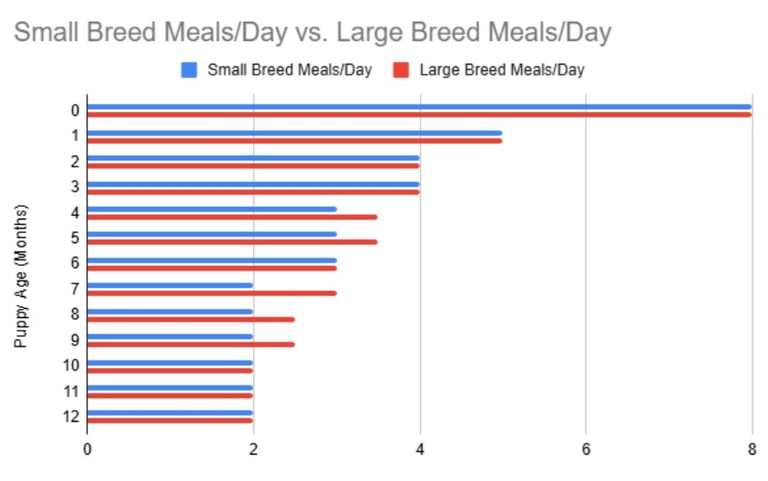
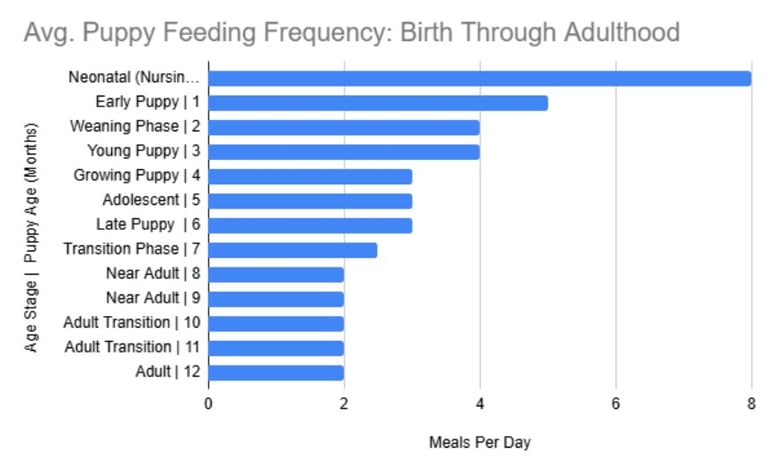
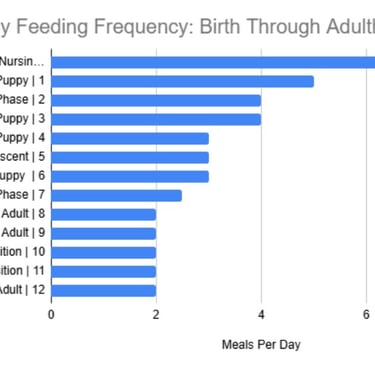
This feeding timeline illustrates how puppies gradually move from frequent meals to a structured adult feeding schedule.
Transitions should always be guided by your dog’s breed, size, and individual needs.
0–1 month (6–8 feedings/day)
Puppies rely on constant calories to avoid hypoglycemia. Nursing is frequent and essential.
2–3 months (4 meals/day)
Digestive systems are still small; spreading calories prevents GI upset and energy crashes.
4–6 months (3 meals/day)
Growth is steady, stomach capacity increases, and routine becomes important.
7 months (2–3 meals/day)
Transitional stage — some puppies do well on 3 meals, others are ready for 2.
8–12 months (2 meals/day)
Most dogs benefit from structured adult feeding schedules.
Line chart showing puppy feeding frequency by age, comparing small breed and large breed puppies from birth to 12 months.
Small and large breed puppies follow similar feeding patterns early in life, but large breeds benefit from more frequent meals for a longer period to support steady growth and joint development.
Small breeds
Mature faster metabolically
Can safely transition to 2 meals/day earlier
Smaller stomachs, but faster digestion
Large & giant breeds
Grow over a longer period (often 12–18 months)
Benefit from extra feeding frequency longer. This avoids:
Blood sugar dips, Overloading joints, Digestive stress from large meals
Choosing the Right Food: One Size Never Fits All
The “best” food depends on your dog’s age, size, breed, activity level, and individual needs.
Large-breed puppies require carefully balanced minerals to support joint development. Small breeds may need higher calorie density. Active dogs need different fuel than low-energy companions. Understanding your dog’s breed characteristic traits are important for creating a healthy diet.
Quality matters more than trends. Look for foods that meet established nutritional standards, are appropriate for your dog’s life stage, and align with your veterinarian’s guidance.
Feeding well is one of the most affective ways you can support your dog’s health — from their first weeks into their golden years.
Final Thoughts
Feeding isn’t just about filling a bowl to the brim or leaving the bag open for your dog to help themself when they’re hungry. It’s about nurturing growth, stability, and long-term health.
When you understand how feeding habits evolve — and why structure, portion control, and appropriate nutrition matter — you can make confident choices that support your dog at every stage.
A well-fed puppy grows into a healthier, more balanced adult. And that foundation starts one thoughtful meal at a time.
Good Luck and Bone-Appetit!
➡ Related Guide : Creating a realistic schedule for your puppy
➡ Helpful Foundational Guide: Puppy Behavior Problems in the First 12 Months
How much should a puppy eat each day?
A puppy’s daily food intake depends on age, breed, size, and activity level. Younger puppies require more calories per pound than adults, but their meals should be divided into smaller portions throughout the day to prevent digestive issues.
Is it normal for puppies to eat less some days?
Yes. Appetite fluctuations can happen during teething, growth spurts, or schedule changes. However, skipping meals for more than 24 hours or showing signs of illness warrants a vet check.
Should puppies eat at the same time every day?
Yes. Feeding your puppy at consistent times supports digestion, potty training, and behavior regulation. Routine meals also make it easier to notice changes in appetite that could signal health concerns.
Can I overfeed my puppy without realizing it?
Yes, especially with treats and table scraps. Overfeeding during puppyhood can strain developing joints and increase the risk of obesity later in life. Measuring meals and limiting treats helps maintain a healthy growth rate.
Does puppy food really make a difference compared to adult food?
Absolutely. Puppy food is designed to support rapid growth, brain development, and bone health. Adult dog food lacks the precise nutrient balance puppies need and can lead to developmental problems if fed too early.
People Also Ask: Puppy Feeding Habits
Why is portion control so important during the first year?
The first year sets the foundation for lifelong health. Proper portion control supports steady growth, prevents joint issues, and reduces the risk of obesity-related problems as your puppy matures into adulthood.
What role does feeding play in long-term health?
Healthy feeding habits influence digestion, immune function, weight management, behavior, and lifespan. Establishing good routines early helps your dog thrive well beyond puppyhood.
How often should I feed my puppy?
Most puppies need multiple meals per day because their bodies grow quickly and burn energy fast. Young puppies typically eat three to four meals daily, while older puppies transition to two meals a day by around 9–12 months. Consistent meal timing helps regulate digestion, energy levels, and behavior.
Is free-feeding bad for puppies?
Free-feeding can make it difficult to monitor how much your puppy eats and may lead to overeating or picky habits. Timed meals allow you to track appetite changes, support healthy digestion, and establish a predictable routine that benefits training and potty schedules.
How do I know if I’m feeding the right portion size?
Portion sizes depend on your puppy’s age, breed, size, activity level, and metabolism. Feeding guidelines on dog food labels are a starting point, but your puppy’s body condition is the best indicator. A healthy puppy should have a visible waist and you should be able to feel—but not see—the ribs easily.


Puppy Feeding Habits FAQs
Can feeding affect my puppy’s behavior?
Yes. Irregular feeding schedules or overfeeding can contribute to hyperactivity, digestive upset, and poor sleep. Balanced meals at consistent times help stabilize energy levels and support calmer behavior throughout the day.
What are signs my puppy’s feeding habits aren’t healthy?
Red flags include persistent diarrhea, vomiting, poor weight gain, excessive weight gain, lethargy, or refusal to eat. Any sudden or ongoing change in appetite should be discussed with your veterinarian.
What kind of food is best for puppies?
Puppies need food specifically formulated for growth. Look for high-quality puppy food that matches your dog’s expected adult size (small, medium, large, or giant breed). These formulas provide the right balance of protein, fat, calcium, and phosphorus to support proper bone and muscle development.
When should I switch my puppy to adult dog food?
The timing depends on breed size. Small breeds often transition earlier, while large and giant breeds need puppy food longer to support controlled growth. Always consult your veterinarian before switching foods to ensure your puppy’s nutritional needs are met.
Why does my puppy act hungry all the time?
Puppies grow rapidly and may seem constantly hungry, especially during growth spurts. This doesn’t always mean they need more food. Structured meals, appropriate portions, and nutrient-dense food usually satisfy true nutritional needs without overfeeding.
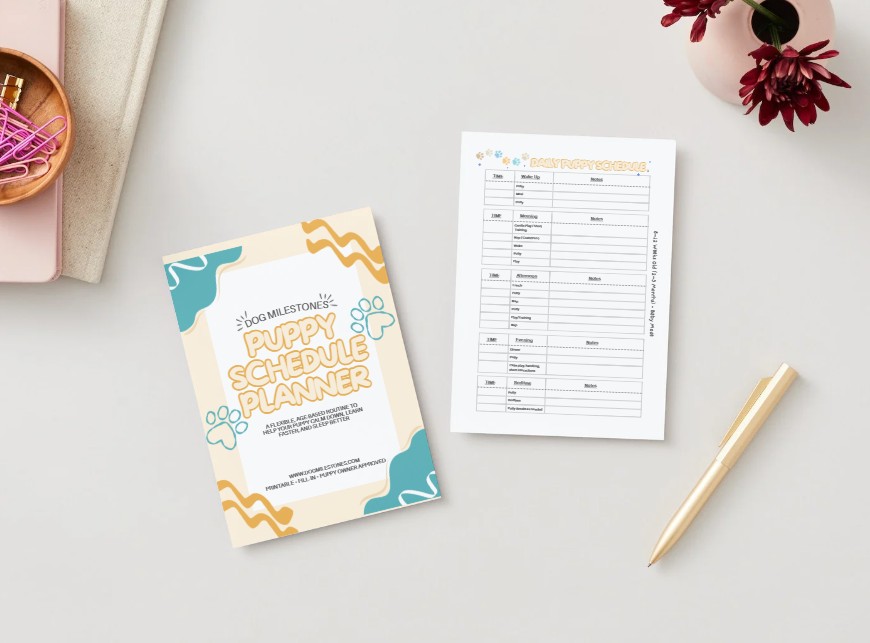
If your puppy struggles with biting, restlessness, or evening chaos,
consistency may be the missing piece — not more effort.
Download our free Puppy Schedule and see first hand how intentional routines help anxious puppies relax, sleep better, and feel secure.
Calm doesn’t happen by accident. It’s built, one predictable day at a time.
Looking for More Answers?
Check out our FAQ page for more answers to common puppy questions.
info@dogmilestones.com
Join Our Puppy Community
Get weekly puppy tips, milestone guides, and helpful resources delivered to your inbox.
Also, we’ll send over our Dog Milestones Puppy Behavior Quiz to help you with tailored advice for your pup.
SOCIALS
Dog Milestones™
Clear, compassionate guidance for your puppy's development journey.
Quick Links
Resources
© 2026 Dog Milestones. Made with ❤️ for dogs and their humans. All rights reserved.